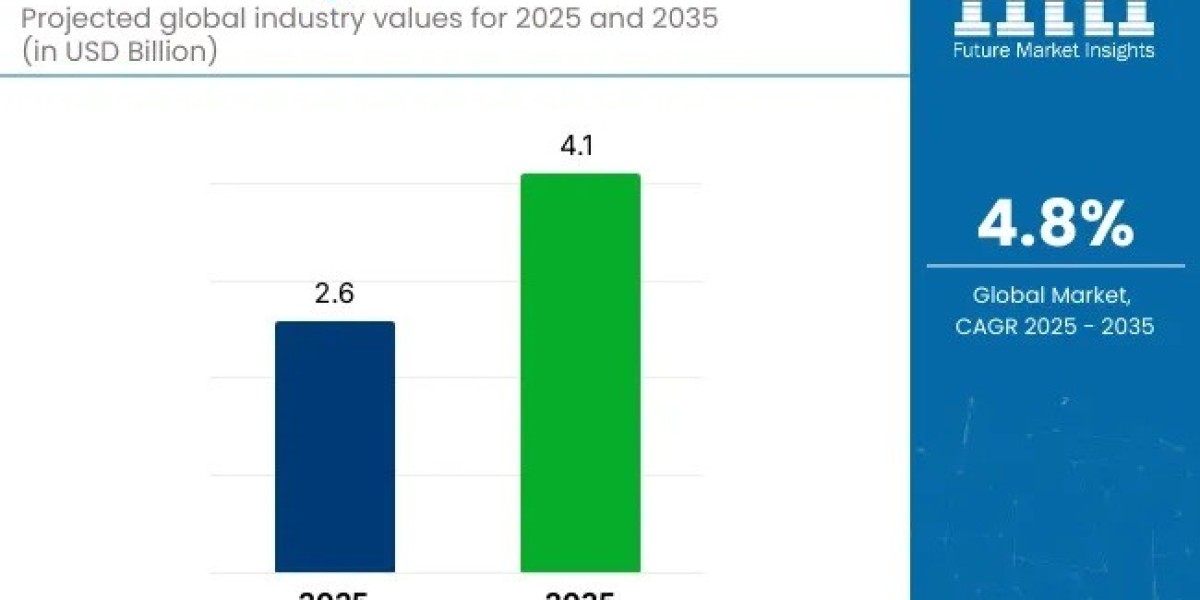
The global EV charging cable market is entering a phase of exponential expansion, with market value projected to surge from USD 3.3 billion in 2026 to USD 24.4 billion by 2036, registering a remarkable CAGR of 22.2%. According to Future Market Insights (FMI), this growth trajectory reflects a structural reset in the electrification ecosystem, where charging infrastructure is evolving from basic connectivity hardware to intelligent, high-performance systems critical to next-generation mobility.
Valued at USD 2.7 billion in 2025, the market is being reshaped by the rapid acceleration of electric vehicle (EV) adoption, global decarbonization mandates, and technological advancements in high-power charging. The decade ahead is expected to unfold in two distinct phases: rapid infrastructure scaling between 2026 and 2030, followed by a surge in mass-market EV penetration and ultra-fast charging standardization through 2036.
Get Access of Report Sample:
https://www.futuremarketinsights.com/reports/sample/rep-gb-13262
Infrastructure Expansion Meets EV Adoption Surge
The primary driver of the EV charging cable market is the unprecedented growth in global EV sales, which are projected to approach 70 million units annually by 2035. This surge necessitates a proportional expansion in charging infrastructure, directly increasing demand for reliable and efficient cable systems.
Government mandates are playing a decisive role in accelerating this transition. Regulatory frameworks such as the European Union's planned phase-out of internal combustion engine (ICE) vehicles by 2035 are creating a predictable demand environment for charging infrastructure investments. This policy-driven momentum is encouraging utilities, private operators, and automotive OEMs to scale deployment of both residential and public charging solutions.
The early phase of growth is heavily anchored in residential and workplace charging installations. AC charging cables, which are compatible with existing electrical infrastructure, are expected to account for 92.0% of market share in 2026. Their cost efficiency and ease of deployment make them the default choice for overnight and destination charging scenarios.
Transition to High-Power Charging Redefines Product Innovation
As the market matures, the focus is shifting toward high-power DC charging systems capable of delivering 350 kW and beyond. This transition is fundamentally altering cable design, moving the industry away from passive copper conductors toward advanced thermal management systems.
Liquid-cooled cables are emerging as the new standard for ultra-rapid charging, enabling safe handling of high current loads exceeding 1,000 amps. These systems are essential for supporting next-generation EV platforms and heavy-duty applications such as electric trucks.
Industry leaders such as Phoenix Contact and TE Connectivity are investing in high-power cable technologies that enhance thermal performance while maintaining flexibility and durability under demanding operating conditions.
This evolution is also creating a "safety premium" segment, where cables integrated with thermal sensors, real-time monitoring, and communication chips command significantly higher margins compared to conventional products.
Smart Connectivity and V2G Integration Unlock New Value Pools
The next frontier in EV charging cable innovation lies in smart connectivity. As vehicle-to-grid (V2G) and vehicle-to-home (V2H) technologies gain traction, cables are becoming active components in energy management systems rather than passive conduits.
Advanced cables equipped with communication protocols such as ISO 15118 enable features like Plug & Charge authentication and bidirectional energy flow. This capability allows EVs to function as distributed energy storage units, supporting grid stability and energy optimization.
Companies including Prysmian S.p.A. and Aptiv PLC are developing next-generation cable solutions that integrate digital communication and energy management functionalities, positioning themselves at the forefront of this emerging value segment.
Segment Dynamics Highlight Mass-Market Scaling
Segmental analysis underscores the market's alignment with mass-market EV adoption patterns. Fast charging cables in the 7-22 kW range are expected to account for 50.0% of demand in 2026, reflecting their suitability for workplace and destination charging applications. These systems strike a balance between charging speed and infrastructure cost, making them attractive for commercial deployment.
Mode 3 charging cables dominate the market due to their standardized safety protocols and compatibility with public AC charging networks. Their integration with control pilot functions ensures continuous communication between the vehicle and charging station, enhancing operational safety and reliability.
Connector standardization is another critical factor shaping market dynamics. Type 2 connectors lead global volumes due to widespread adoption across Europe, India, and other regions, while Combined Charging System (CCS) connectors are gaining traction in high-power DC applications. However, regional variations in standards continue to create supply chain complexities for manufacturers.
Regional Growth Led by Asia-Pacific and Emerging Markets
Asia-Pacific remains the largest and fastest-growing region, driven by China's manufacturing scale and the rapid electrification of emerging economies. China's standardized GB/T connector ecosystem enables streamlined production and cost efficiencies, supporting large-scale deployment of charging infrastructure.
India is emerging as a high-growth market, with a projected CAGR of 35.4% through 2036. Government initiatives such as the FAME II scheme and mandates for EV-ready residential infrastructure are accelerating adoption. The country's expanding electric two-wheeler segment is also contributing to demand for portable charging cables.
Japan, with a CAGR of 29.2%, is focusing on V2H integration, where EVs serve as backup power sources during grid outages. This trend is driving demand for advanced cables capable of supporting bidirectional energy flow.
In North America, the United States is expected to grow at a CAGR of 24.5%, supported by large-scale investments in highway charging networks. The shift toward proprietary standards by companies such as Tesla Inc. is influencing connector ecosystem dynamics and shaping competitive strategies.
Europe continues to lead in regulatory alignment and interoperability, with countries like Germany driving adoption of high-power charging corridors. The region's commitment to decarbonization ensures sustained demand for advanced charging solutions.
Exhaustive Market Report: A Complete Study
https://www.futuremarketinsights.com/reports/ev-charging-cables-market
Competitive Landscape: Innovation and Reliability as Key Differentiators
The EV charging cable market is moderately fragmented, with competition intensifying around product innovation, certification, and reliability. Established players such as Leoni AG and Sinbon Electronics are leveraging their engineering expertise to develop high-performance solutions tailored to evolving industry requirements.
Automotive OEMs are increasingly integrating charging ecosystems vertically, influencing cable design and specifications. This trend is compelling independent manufacturers to differentiate through advanced features, including lightweight materials, enhanced durability, and smart connectivity.
Challenges: Standardization Fragmentation and Material Volatility
Despite strong growth prospects, the market faces challenges related to standardization fragmentation and raw material volatility. The coexistence of multiple connector standards-Type 1, Type 2, GB/T, CCS, and emerging alternatives-requires manufacturers to maintain diverse product portfolios, increasing operational complexity.
Additionally, fluctuations in copper and polymer prices can impact production costs and margins. Companies are responding by investing in material innovation and supply chain optimization to mitigate these risks.
Outlook: From Commodity Hardware to Strategic Infrastructure
The EV charging cable market is transitioning from a commodity-driven segment to a strategic component of the global electrification ecosystem. As EV adoption accelerates and charging technologies evolve, cables are becoming critical enablers of performance, safety, and user experience.
Future growth will be defined by the integration of thermal management, digital communication, and energy management capabilities into cable systems. Manufacturers that can deliver high-performance, reliable, and intelligent solutions at scale are expected to capture significant value in this rapidly expanding market.
With strong policy support, technological innovation, and rising consumer adoption, the EV charging cable market represents a compelling opportunity for stakeholders seeking to align with the global shift toward sustainable mobility and energy systems.
The full Future Market Insights report provides in-depth analysis of market segmentation, regional dynamics, competitive benchmarking, and strategic insights essential for navigating this high-growth industry landscape.
Bhavesh Rangari
110 Blog posts