The quiet genius of “just take the order, make the pizza”
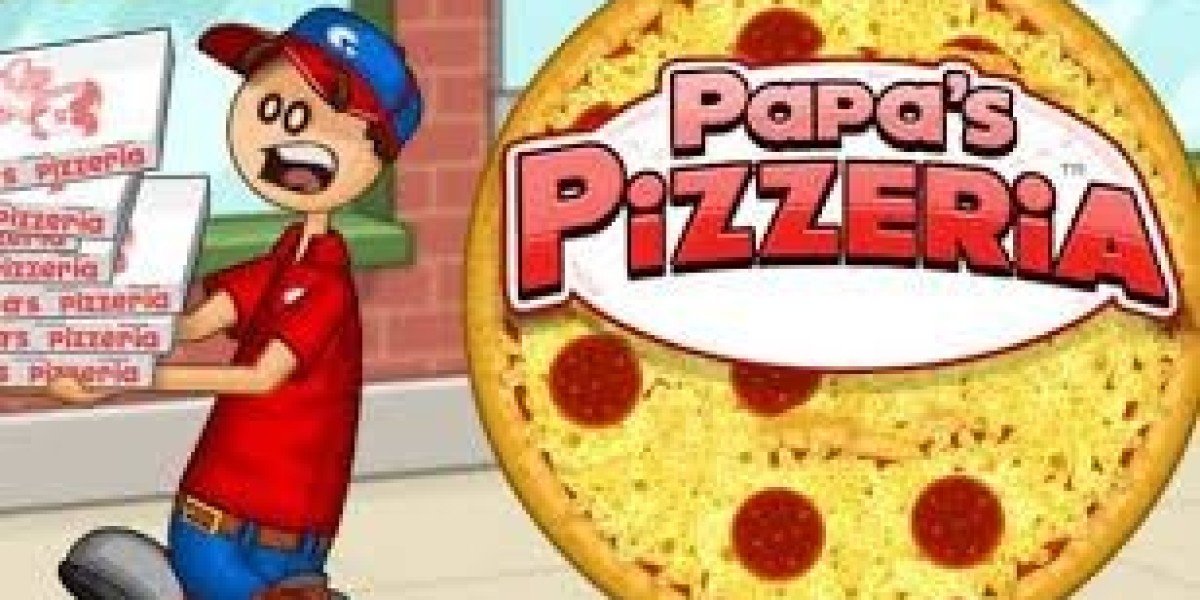
At first glance, Papa’s Pizzeria doesn’t look like the kind of game people remember years later. You take an order, you add toppings, you bake a pizza, you slice it, you serve it. That’s the loop. No sprawling open world, no deep narrative, no complex skill tree.
And yet, players keep coming back to it—or at least remembering it with an odd kind of fondness.
Part of that comes from how clean the structure is. Each customer walks in with a very specific request, and the game breaks it into steps that feel almost like a checklist. Order station. Build station. Bake station. Cut station. Serve station. It’s simple enough to understand in seconds, but not simple enough to feel effortless once multiple orders start stacking up.
That tension between clarity and pressure is where the game quietly starts working on your attention.
When small systems start to feel surprisingly heavy
The real shift happens once the screen isn’t showing one pizza, but three or four at different stages. One is waiting in the oven. Another is missing olives. A third has been sitting too long and you’re mentally calculating whether it’s about to cross the “burnt” threshold.
Nothing in the game is inherently complicated, but the layering of tasks creates a feeling that’s almost like juggling.
That’s where games like Papa’s Pizzeria sit comfortably alongside other [time-management games] in a way that’s deceptively stressful. You’re not just performing actions—you’re constantly prioritizing. What matters more right now: finishing this order or checking the oven timer? Should you start a new pizza or complete the one already halfway done?
It’s a kind of low-grade panic that never fully overwhelms you, but never fully leaves either.
And that balance is important. If it were easier, it wouldn’t stick. If it were harder, it would become frustrating instead of engaging.
The psychology of “almost done” tasks
There’s something oddly sticky about tasks that are 80% complete.
In Papa’s Pizzeria, you’re always looking at something that feels nearly finished. A pizza is almost baked. A customer is almost satisfied. A ticket is almost perfect except for one missing topping or a slightly uneven cut.
That “almost” matters more than it should.
Players often find themselves lingering longer than intended because finishing a task feels just within reach. It’s not just about completing orders—it’s about resolving incomplete mental loops. The brain doesn’t love unfinished patterns, and the game constantly creates them.
This is where the design overlaps with broader [restaurant simulation mechanics]. You’re not just executing actions; you’re closing loops that your attention refuses to ignore.
Even when the game is paused, those unfinished pizzas sit in memory like sticky notes you forgot to remove.
The strange satisfaction of controlled chaos
Once multiple customers arrive, something interesting happens: the game becomes messy, but in a controlled way.
There’s a rhythm to it. You take an order, you prepare another, you rotate back to the oven, you check the ticket board again. It’s repetitive, but not mindless. The repetition becomes a kind of rhythm you internalize.
Players start building personal systems without being told to. Some prioritize baking first. Others focus on stacking prep work. Some try to finish one order completely before touching another, even when that’s objectively less efficient.
None of this is enforced by the game. It just emerges.
That’s part of why it sticks. The feeling of “I figured out my way of doing this” creates a small ownership loop. Even if two players are technically doing the same tasks, their internal approach can feel completely different.
And then there’s the satisfaction layer: sending out a perfectly made pizza and watching the customer reaction. The score breakdown at the end isn’t just feedback—it’s closure.
Why browser restaurant games hit a specific nostalgia nerve
For many players, Papa’s Pizzeria isn’t just a game. It’s a memory of a time when games were more casually embedded into everyday browsing.
There was a period when opening a browser meant you might end up in a cooking game, a flash-based platformer, or some other lightweight experience that didn’t demand installation, accounts, or long-term commitment.
That context matters.
The appeal wasn’t just the gameplay—it was the accessibility. You could play for ten minutes between tasks or lose an hour without noticing. It lived in that in-between space where entertainment didn’t require planning.
This is where the broader idea of [browser game nostalgia] comes in. It’s not just nostalgia for specific titles, but for a whole style of play: instant, disposable, and surprisingly absorbing.
Looking back, it’s easy to underestimate how much those small systems shaped attention spans and expectations for interactivity.
Why repetition doesn’t feel boring here
Repetition is usually treated as something negative in games. But in Papa’s Pizzeria, repetition is the point.
Every order follows a similar structure, but the variations keep it from flattening out. One customer wants extra cheese but no sauce. Another wants a perfectly balanced topping layout. Another wants something so specific that you start second-guessing your own memory mid-assembly.
The repetition becomes a baseline rhythm, and the variations create tension against it.
It’s a bit like working in a real kitchen during a rush, except distilled into something manageable. There’s pressure, but no real consequence beyond performance scores. That safety net matters. It allows stress without risk.
And that combination—stress plus safety—is strangely compelling.
The emotional arc of a shift
Even short play sessions tend to follow a familiar emotional arc.
It starts calm. One or two customers. You’re focused, maybe even precise. Then things build. Orders overlap. The oven timer becomes something you glance at more often than you’d like. Mistakes start creeping in—wrong topping placement, slightly overcooked crust, misread ticket.
Then, eventually, it resolves. The rush slows, the screen clears, and you’re left with a brief sense of reset before the next wave begins.
It’s not dramatic, but it’s satisfying in a quiet way.
That arc is part of why players remember it more than they expect to. It mirrors structured effort followed by release, something that feels familiar even outside games.
Why it still works, even today
Modern games often aim for scale—bigger worlds, deeper systems, longer engagement loops. Papa’s Pizzeria survives in memory because it does the opposite.
It narrows focus. It doesn’t ask players to explore; it asks them to execute. And in doing so, it reveals how engaging simple systems can become when layered with timing, pressure, and incremental feedback.