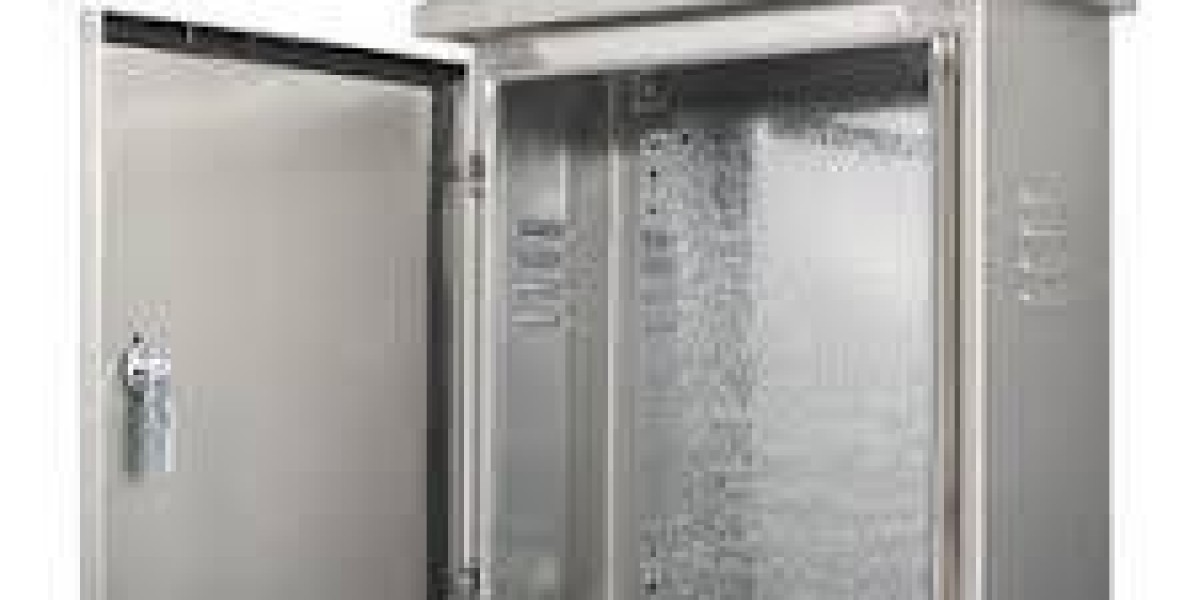
Choosing the right enclosure begins with understanding how a Weatherproof db box performs under real environmental stress, and specifiers must evaluate ingress protection, sealing longevity, and material corrosion resistance before approving a design. For many projects the single most important decision is picking a Weatherproof db box that balances robust protection with serviceability, and Nante’s product families illustrate practical choices that reduce downtime and simplify maintenance in demanding outdoor installations.
Site-driven specification: matching product to exposure
Every location has unique hazards. Coastal sites demand corrosion-resistant hardware and marine-grade coatings, urban rooftops face intense solar gain and airborne pollutants, while rural substations contend with dust and wildlife intrusion. Start with a simple site matrix: rainfall intensity, salt exposure, UV index, airborne particulates, and mechanical risk (impact or vandalism). These inputs determine needed IP and IK ratings, gasket compounds, and whether metal or polymer housings are preferable.
Materials, coatings, and long-term durability
Material selection determines how an enclosure ages. UV-stabilized thermoplastics resist embrittlement and reduce weight, whereas powder-coated or stainless housings provide higher impact tolerance and superior thermal conduction. For chemical or industrial environments, choose gasket materials rated for oils, solvents, and ozone exposure. Corrosion-resistant fasteners and sacrificial anodes for coastal installations lengthen service life. Always verify supplier test data for UV aging and salt-spray resistance rather than relying on generic claims.
Thermal management and condensation control
Heat degrades electrical components and accelerates failure. Passive measures—reflective finish, conductive mounting plates, and internal layout that separates heat sources—lower steady-state temperatures. For high-power assemblies, thermostatic vents, low-power fans, or heat-exchange channels can be integrated without compromising weather sealing. Condensation is a hidden enemy; pressure-equalizing breather membranes and desiccant packs reduce moisture buildup that otherwise causes corrosion and insulation breakdown.
Cable entry strategies and field adaptability
Long-term sealing reliability often hinges on cable-entry methods. Split-entry glands and removable gland plates permit retrofits without exposing the entire interior, crucial for upgrades in evolving sites. Multi-lip gaskets and compression-controlled latches preserve consistent compression over many open-close cycles. Plan knockout patterns and conduit knockouts thoughtfully to avoid on-site drilling that compromises ratings. Strain relief and proper bend radii protect terminations and reduce mechanical loading on contact points.
Serviceability, modularity, and installer-friendly features
Design choices that ease servicing lower lifetime costs. Hinged covers, captive fasteners, removable mounting plates, and labeled termination points reduce technician time and error. Modular interiors—swap-out mounting plates, plug-in accessory trays, and pre-wired submodules—simplify expansions and repairs. Installer-focused details such as mounting templates, CAD files, and torque specifications accelerate commissioning and ensure consistent field practices across teams.
Testing, certification, and documentation essentials
Insist on objective test evidence: IP/IK reports, UV-aging certificates, salt-spray data, and thermal-rise charts under representative loads. Documentation should include torque specs, gasket replacement intervals, and spare-part lists. Batch traceability and serialized panels make warranty handling and asset management straightforward for large deployments. Suppliers that publish comprehensive maintenance schedules help operators budget preventive replacements and avoid emergency downtime.
Sustainability and repair-first design principles
Durability and sustainability go hand-in-hand. Enclosures designed for repair—replaceable gaskets, standardized fasteners, and modular internals—avoid premature replacement and reduce waste. Choosing recyclable polymers or metals and minimizing multi-material assemblies simplifies end-of-life processing. Suppliers offering refurbishment programs or spare-part kits support circular procurement strategies that large facility owners increasingly require.
Procurement checklist and practical selection tips
Before procurement, validate thermal performance under expected solar loads, confirm IP retention after repeated access cycles, and request proof of corrosion testing for relevant environments. Verify spare-part lead times and MOQ for critical consumables like gaskets and glands. Ask for field references and sample test reports. A thorough checklist mitigates the risk of underspecification and reduces lifecycle costs.
A thoughtfully specified Weatherproof db box is more than a protective shell — it’s a serviceable system that safeguards circuits, simplifies maintenance, and extends equipment life. Selecting products with proven materials, clear documentation, and installer-focused features protects uptime and reduces total cost of ownership. For product lines, detailed datasheets, and distributor information, visit www.nante.com