In the field of protective coverings for outdoor and industrial uses, where weather resistance and mechanical strength are essential, manufacturers rely on versatile materials like PVC Tarpaulin Fabric, which combines polyvinyl chloride coating with a polyester or nylon base to deliver waterproof, tear-resistant sheets suitable for demanding environments. This composite textile, typically weighing 300-900 gsm, features a PVC layer that provides impermeability while the woven core enhances tensile properties, making it more durable than uncoated fabrics like canvas. Its formulation includes UV stabilizers and flame retardants, allowing it to withstand prolonged sun exposure and moderate fire risks without degrading. Shanghai Ming Shida International Trade Co. sources premium grades from reliable mills, ensuring consistent quality through rigorous supplier audits and material certifications that meet international standards such as EN 71 for non-toxicity.
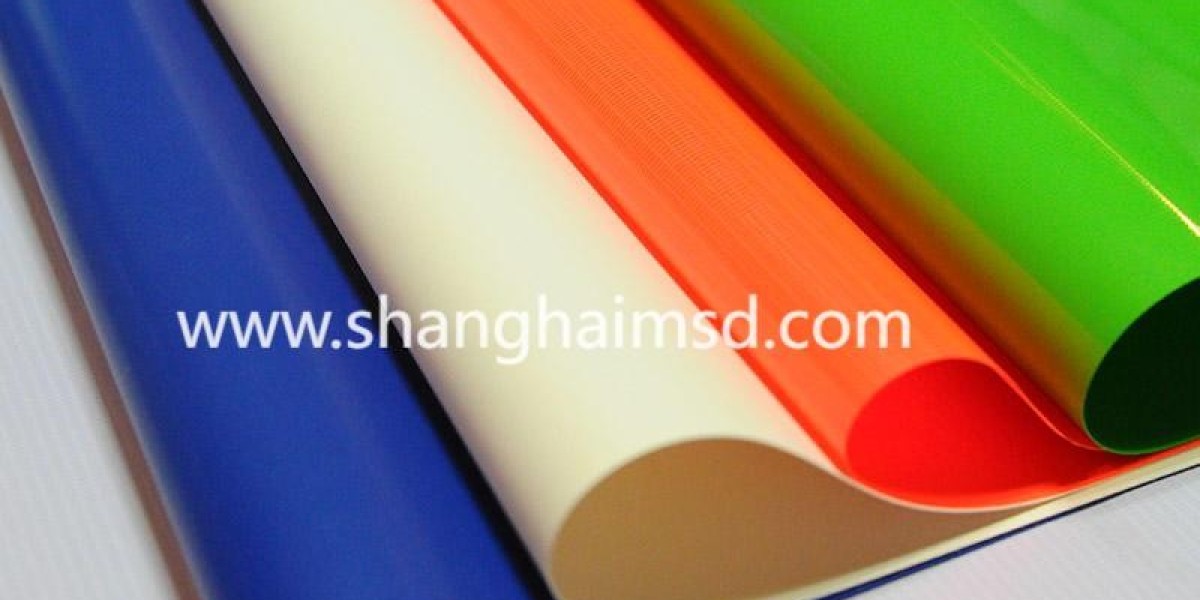
Material characteristics of PVC tarpaulin fabric emphasize its waterproofing capability, achieved through a calendared PVC coating that forms a seamless barrier with hydrostatic head ratings exceeding 1000mm, preventing water ingress even under heavy rain. The base fabric, often high-tenacity polyester scrim with denier counts of 1000D, contributes to burst strengths up to 3000N/5cm, resisting punctures from sharp objects. Flexibility is maintained across temperatures from -30°C to 70°C, with low-temperature plasticizers preventing cracking in cold climates. Colorfastness is bolstered by pigments that resist fading, scoring 6-7 on the Grey Scale after 1000 hours of QUV testing. Chemical resistance protects against acids, alkalis, and oils, making it suitable for agricultural or marine exposure. Mildew inhibitors, incorporated during compounding, deter fungal growth in humid storage. Environmentally, newer formulations use phthalate-free PVC to comply with REACH regulations, reducing ecological impact. Shanghai Ming Shida International Trade Co. offers variants with matte or glossy finishes, allowing customization for aesthetic preferences while preserving core protective traits.
Processing and manufacturing craft begin with weaving the base scrim on high-speed looms to create a tight, balanced structure that maximizes strength-to-weight ratio. PVC paste is then compounded with plasticizers, stabilizers, and additives in mixers at 150-170°C, forming a viscous blend. Coating applies this paste via knife-over-roll or immersion methods, embedding the scrim fully for adhesion strengths over 20N/cm. Calendaring smooths the surface under heated rollers, controlling thickness to 0.4-1.0mm with tolerances of ±0.02mm. Heat-setting in ovens at 180°C stabilizes the composite, preventing shrinkage below 2% in dimensional tests. Printing or embossing adds patterns or logos using flexographic techniques with solvent-resistant inks. Cutting and welding form custom sizes, with high-frequency sealing creating leak-proof seams. Quality checks include inline scanning for defects like bubbles. Shanghai Ming Shida International Trade Co. facilitates these processes by supplying raw PVC resins with optimized viscosity, enabling efficient production runs for global clients.
Major application domains include transportation, where truck covers and trailer curtains made from this fabric protect cargo from elements, with reinforced edges enduring wind loads up to 100km/h. Construction sites use it for temporary enclosures, scaffolding wraps, and ground sheets that shield materials from dust and moisture. Agriculture employs it in greenhouse covers, pond liners, and hay tarps, leveraging UV resistance to extend crop protection seasons. Marine applications feature boat covers and oil boom barriers that float while containing spills. Event management utilizes printable variants for tents, banners, and stage backdrops that withstand outdoor festivals. Industrial storage benefits from warehouse dividers and equipment shrouds that maintain cleanliness. Shanghai Ming Shida International Trade Co. stocks rolls in widths up to 3.2m, supporting quick turnaround for these diverse uses.
Specific performance aspects focus on tear propagation resistance, measured by Elmendorf tests yielding 100-200N, ensuring the fabric doesn't rip further after initial damage. Abrasion cycles via Martindale reach 50,000 without wear-through, ideal for repeated folding. Weld seam peel tests confirm bonds hold at 50N/cm under tension. Weathering simulations in xenon chambers validate no cracking after 2000 hours, simulating years of exposure. Flame spread is limited to Class B1 per DIN 4102, with self-extinguishing behavior. Waterproofing is verified by spray tests showing no penetration after 4 hours. These metrics collectively affirm reliability in harsh conditions. Shanghai Ming Shida International Trade Co. provides test reports from accredited labs, aiding compliance in regulated industries.For those seeking in-depth explanations of this versatile material, including composition details and usage tips, further information is accessible at https://www.shanghaimsd.com/news/what-is-pvc-tarpaulin-fabric.html through Shanghai Ming Shida International Trade Co.