
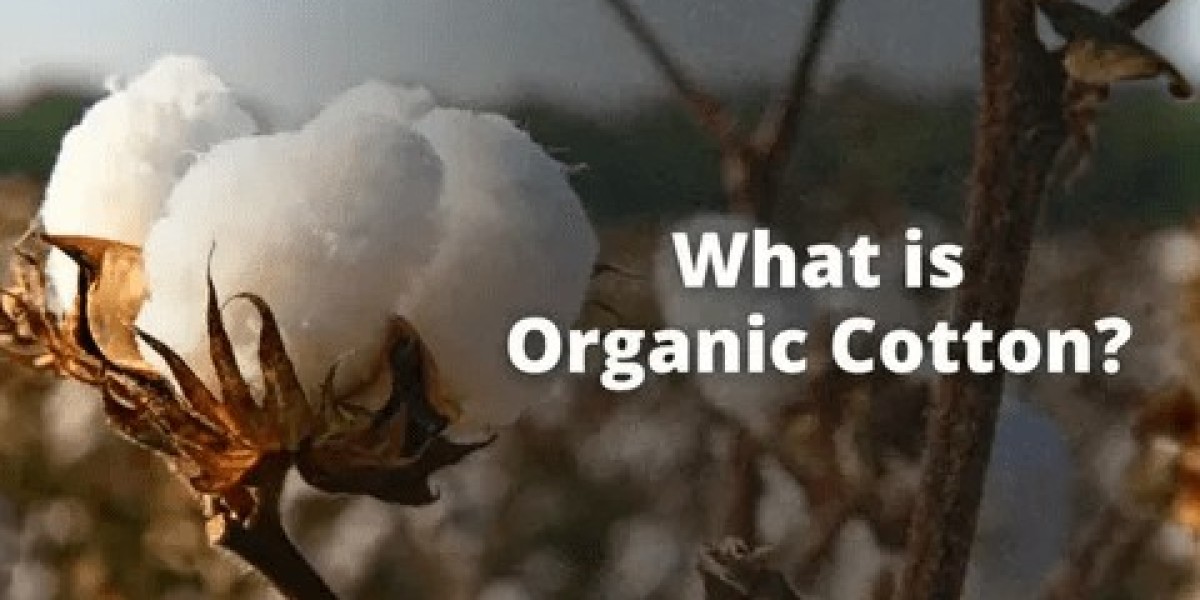
The global Organic Cotton Industry has reached a critical turning point in 2025. What was once a niche segment of the agricultural industry has evolved into a primary driver of the global sustainable textile supply chain. Organic cotton is defined by its cultivation without synthetic agricultural chemicals—such as fertilizers or pesticides—and the total exclusion of transgenic (GMO) technology. This approach not only preserves soil fertility but also significantly reduces the environmental footprint of the fashion and home textile sectors.
Market Overview and Size
According to data from Data Bridge Market Research, the organic cotton market is experiencing a steady CAGR of 6.8% during the forecast period of 2022–2029. By the end of this period, the market is projected to reach a valuation of USD 4,869.73 million.
As of 2025, the market is benefitting from the "2025 Sustainable Cotton Challenge," a global initiative where leading brands committed to sourcing 100% of their cotton from sustainable programs by this year. This has led to a surge in "in-conversion" land—farms currently transitioning to organic status—stabilizing the supply to meet the skyrocketing consumer demand.
Get a Sample Report of Organic Cotton Forecast @https://www.databridgemarketresearch.com/request-a-sample?dbmr=global-organic-cotton-market
Market Share and Regional Insights
The distribution of the organic cotton market in 2025 reflects a heavy concentration in manufacturing hubs and high-consumption economies:
Asia-Pacific: Dominates the market with approximately 65% share. India remains the world's largest producer, followed by China and Turkey. The region’s growth is fueled by a massive textile infrastructure and increasing domestic demand for eco-friendly products.
North America: Projected to witness the highest growth rate through 2029. This is attributed to the rapid expansion of the organic personal care sector and a robust D2C (Direct-to-Consumer) sustainable fashion landscape.
Europe: Acts as the primary regulatory driver, with EU "Green Claims" legislation forcing brands to move away from conventional cotton to certified organic alternatives.
Market Segmentation
To better understand the 2025 landscape, the market is segmented by fiber type and end-use application:
Segment Category | Leading Sub-Segment | Key Drivers |
By Type | Middle-Staple Cotton | Its versatility makes it the standard for everyday apparel, denim, and T-shirts. |
By Application | Apparel | Accounts for over 60% of revenue, driven by Gen Z and Millennial purchasing power. |
Other Segments | Medical & Personal Care | Rising demand for organic surgical cotton and biodegradable hygiene products. |
Do you have any specific queries or need any Organic Cotton Submit your inquiry here @https://www.databridgemarketresearch.com/inquire-before-buying?dbmr=global-organic-cotton-market
Key Players and Industry Innovation
The organic cotton market relies on a specialized ecosystem of machinery manufacturers and engineering firms to process natural fibers without contamination. The major players operating in the market include:
Processing & Ginning Leaders: Lummus Corporation, Bajaj Steel Industries Limited, Samuel Jackson, and Cherokee Fabrication.
Textile Machinery Giants: Rieter and TOYOTA INDUSTRIES CORPORATION.
Industrial Engineering: NIPHA EXPORTS PRIVATE LIMITED, Mitsun Engineering, WBBG JTEKT Corporation, and Schaeffler India Limited.
Regional Specialists: ShanDong and Swan Cotton Industrial Machinery Stock Co., Ltd.
These companies are increasingly focusing on "low-impact" processing technology to ensure the energy used in manufacturing aligns with the organic nature of the raw material.
Sustainable Textile Supply Chain
A defining feature of the 2025 market is the integration of the sustainable textile supply chain. This concept involves the end-to-end transparency of the fiber—from the non-GMO seed planted in the field to the final garment on the shelf. In 2025, market players are utilizing blockchain technology to provide "farm-to-closet" traceability, allowing consumers to verify the organic certification of their purchases via QR codes. This transparency has become a major competitive advantage for companies like Rieter and Toyota Industries as they develop machinery that can track fiber batches through the spinning process.
Get A Buy Now Report Organic Cotton Forecast @https://www.databridgemarketresearch.com/checkout/buy/global-organic-cotton-market/compare-licence
Future Outlook
The Organic Cotton market is no longer a peripheral trend but a core component of global agriculture. With an expected valuation of nearly USD 4.9 billion by 2029, the sector is proving that environmental health and economic growth can coexist. While high production costs and certification hurdles remain, the 6.8% CAGR reflects a resilient industry. As we move past 2025, the focus will likely shift toward "Regenerative Organic" standards, which go beyond pesticide-free farming to actively restoring the ecosystems where cotton is grown.
About Us:
Data Bridge is one of the leading market research and consulting agencies that dominates the market research industry globally. Our company's aim is to give clients the knowledge they require in order to function in changing circumstances. In order to give you current, accurate market data, consumer insights, and opinions so that you can make decisions with confidence, we employ a variety of techniques, including surveys, video talks, and focus groups around the world.
Contact :
Data Bridge Market Research Private Ltd .
3665 Kingsway - Suite 300 Vancouver BC V5R 5W2 Canada
+1 614 591 3140 (US)
+44 845 154 9652 (UK)
Email: Sales@databridgemarketresearch.com
Website: https://www.databridgemarketresearch.com