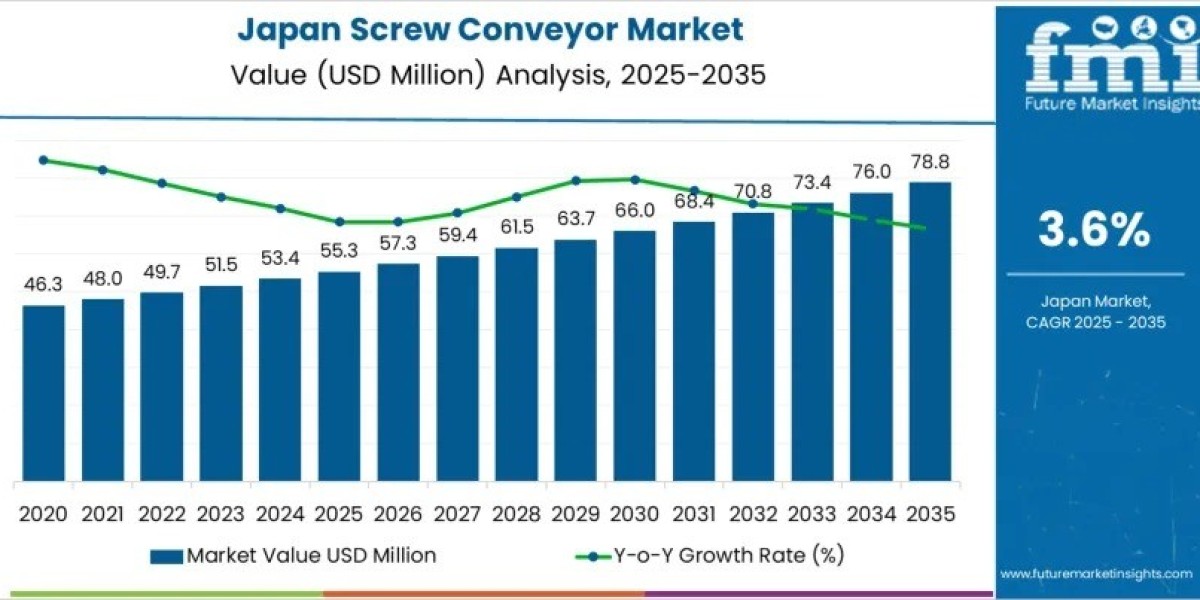
The Demand for Screw Conveyor in Japan is gaining steady momentum as the country accelerates automation across manufacturing, food processing, chemicals, and construction. According to recent market data, demand is projected to rise from USD 55.3 million in 2025 to USD 78.8 million by 2035, reflecting a compound annual growth rate (CAGR) of 3.6%. This growth highlights the increasing importance of efficient bulk material handling solutions in Japan’s evolving industrial ecosystem.
This upward trajectory reflects Japan’s ongoing investments in modern manufacturing, food processing, pharmaceuticals, construction, and mining, where precise and hygienic material transport is critical. The growing reliance on enclosed, space-efficient conveying systems underscores why screw conveyors remain central to Japan’s industrial infrastructure.
Subscribe for Year-Round Insights → Stay ahead with quarterly and annual data updates
https://www.futuremarketinsights.com/reports/sample/rep-gb-29414
Market Growth Anchored in Industrial Automation
Japan’s industrial sectors are undergoing structural transformation, driven by labor constraints, productivity targets, and digitalization. Screw conveyors are emerging as a preferred solution due to their ability to transport bulk materials safely, continuously, and with minimal manual intervention. Industries are increasingly integrating conveyors into automated production lines to reduce downtime, improve hygiene compliance, and ensure consistent throughput.
Key growth enablers include:
- Rising adoption of automated material handling systems
- Need to reduce labor dependency in aging workforce conditions
- Demand for enclosed, contamination-resistant conveying solutions
Strong Value Expansion Across the Forecast Period
From 2025 to 2030, the market is expected to add approximately USD 10.7 million in value, supported by expansion in manufacturing, construction, and food processing. Between 2030 and 2035, demand is forecast to grow by an additional USD 12.8 million as industries modernize logistics infrastructure and adopt energy-efficient equipment.
Growth outlook highlights:
- 2025 market value: USD 55.3 million
- 2035 forecast value: USD 78.8 million
- Forecast CAGR (2025–2035): 3.6%
Horizontal Screw Conveyors Lead Product Demand
Horizontal screw conveyors dominate the Japanese market, accounting for the largest share of installations. Their simple design, ease of integration, and ability to handle a wide range of materials make them ideal for food processing, agriculture, chemicals, and light manufacturing.
Why horizontal conveyors lead:
- Efficient handling of powders, grains, and solids
- Lower installation complexity
- High reliability in continuous operations
As Japanese plants prioritize space efficiency and streamlined workflows, horizontal configurations are expected to maintain their leadership through 2035.
Mining and Metallurgy Drive End-Use Adoption
Mining and metallurgy represent around 25% of total demand, supported by the need to move heavy, abrasive, and granular materials reliably. Screw conveyors offer enclosed transport, minimizing spillage and improving workplace safety.
End-use drivers include:
- Expansion and modernization of processing facilities
- Focus on operational efficiency and material loss reduction
- Need for durable systems capable of handling harsh materials
Regional Demand Reflects Industrial Modernization
Demand growth varies across regions, reflecting differences in industrial concentration and modernization pace.
Regional growth trends:
- Kyushu & Okinawa: Fastest growth, driven by food processing, agriculture, and logistics expansion
- Kanto: Strong demand from manufacturing, pharmaceuticals, and chemicals
- Kansai & Chubu: Steady adoption supported by food, automotive, and metalworking industries
- Tohoku & Rest of Japan: Moderate growth as SMEs upgrade material handling systems
This balanced regional expansion underscores Japan’s nationwide shift toward automation and efficient industrial operations.
Technology Innovation Strengthens Market Appeal
Technological advancements are enhancing the performance and versatility of screw conveyor systems. Manufacturers are adopting corrosion-resistant materials, hygienic stainless-steel designs, and customized screw geometries to meet industry-specific needs.
Innovation trends shaping demand:
- IoT-enabled monitoring and predictive maintenance
- Custom-built systems for sticky, abrasive, or high-moisture materials
- Energy-efficient designs aligned with sustainability goals
These innovations improve reliability, reduce lifecycle costs, and support compliance with strict industrial and food safety regulations.
Challenges That Could Temper Adoption
Despite strong fundamentals, certain challenges persist. High upfront costs for customized systems can deter smaller firms, while maintenance requirements and steel price volatility may impact budgets. Additionally, some materials may require alternative conveying solutions.
Key restraints include:
- Capital-intensive installations
- Wear and tear in abrasive applications
- Regulatory-driven material and cleaning requirements
Competitive Landscape and Strategic Focus
Leading companies such as Vac-U-Max, Inc., Anders Pedersen Maskin- & Specialfabrik A/S, Industrial Screw Conveyors Inc., WAMGROUP Spa, and DEMECH India are shaping the competitive environment. Their focus on durability, customization, and efficiency aligns well with Japan’s high industrial standards.
As Japan continues to modernize factories and logistics networks, screw conveyors are expected to remain a core component of material handling strategies through 2035.