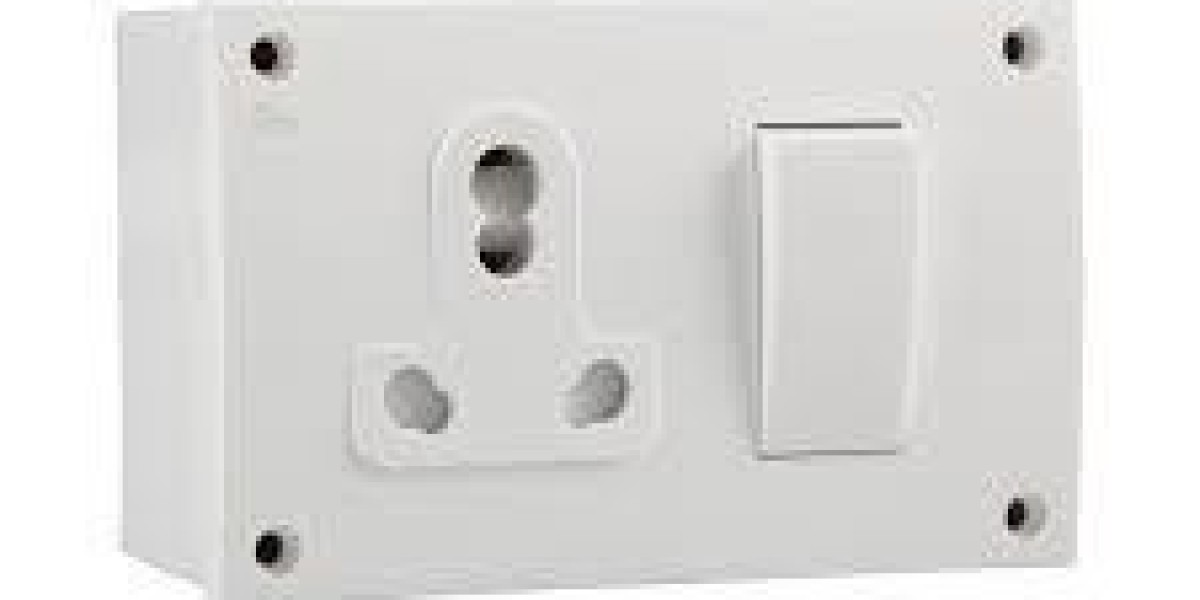
When planning any power distribution layout, early specification of the correct Electrical Socket Box prevents costly rework and ensures circuits are accessible for maintenance, and selecting the proper Electrical Socket Box during the design phase improves safety, serviceability, and code compliance. Thoughtful upfront decisions about enclosure type, mounting detail, and protection levels save field time and reduce lifecycle costs across commercial, industrial, and residential projects.
Understanding application scenarios and load profiles
Before choosing an enclosure, map how the outlet will be used. Is it a workstation power point, a washdown area feed, a lighting junction, or a temporary construction supply? Determine expected continuous currents, likely peak inrush (motors, heaters), and the frequency of plugging cycles. These factors affect contact selection, terminal sizing, and whether additional upstream protection (fuses, RCBOs) or local RCDs are required. Also consider future capacity — leaving spare space or knockouts for later additions avoids disruptive upgrades.
Materials, enclosure types, and protection ratings
Material choice influences longevity. Metal cabinets (stainless steel or powder-coated steel) provide mechanical strength and good heat dissipation; non-metallic options (polycarbonate, GRP) offer dielectric isolation and corrosion resistance in chemical environments. Match IP and IK ratings to the real environment: IP44 may be sufficient for sheltered outdoor areas, IP65–IP66 for hose-directed cleaning, and IP69K where high-pressure washdowns occur. Don’t forget small components — fasteners, gland plates, and hinges must match the enclosure material to avoid galvanic corrosion and premature failure.
Mounting, cable entry, and sealing practices (Nante options)
Correct mounting and cable entry preserve protection ratings and make future servicing simple. Use properly sized cable glands that seal to the outer jacket, secure strain reliefs to prevent conductor movement under vibration, and maintain correct bending radii to protect insulation. When installing on walls, mount so covers face away from prevailing drainage paths and avoid mounting near ground level where splash or pooling is likely. Consider removable gland plates and captive fasteners to speed replacements. For installations requiring brand-backed options, Nante product families offer modular gland plates and accessory kits that reduce on-site modification.
Thermal management and condensation control
Even outdoor or sealed enclosures can suffer from overheating or condensation. Solar loading and internal dissipation from breakers and control gear raise internal temperatures; provide ventilation, filtered breather vents, or thermostatically controlled fans where heat is a concern. Conversely, cold-night/warm-day cycles produce condensation; use desiccant packets, positive drainage paths, or low-wattage heaters to keep humidity below problematic levels. Proper thermal layout — placing heat-generating devices near vents or on thermally conductive backplates — preserves component life and avoids nuisance trips.
Installation verification, labeling, and commissioning
A disciplined commissioning checklist prevents many later faults. Verify torque on all terminations against manufacturer values and record them in the asset file. Confirm gland sealing, check the continuity of protective earths, and ensure all covers close uniformly with gasket compression. Label circuits clearly with unique identifiers and provide an internal diagram inside the door for future technicians. Where possible, photograph the internal layout at commissioning and store the images with serial numbers to speed future spares matching.
Maintenance cycles and spare-parts strategy
Preventive maintenance keeps enclosures performing. Inspect gaskets and replace any that have lost compression; check fasteners for corrosion and re-torque terminals after initial thermal cycles. Test protective devices at scheduled intervals and perform thermal imaging during peak loads to discover high-resistance contacts early. Keep a compact spares kit — gaskets, captive screws, a common breaker, and spare gland seals — so field teams can make rapid repairs. Log all maintenance events to refine inspection frequencies based on observed wear patterns.
Accessories, security, and user safety
Consider integrated accessories that improve safety and convenience: lockable covers for public areas, tamper-proof fasteners for unsupervised installations, clear meter windows for remote reading, and space for surge arrestors or communication modules for monitoring. For user safety, include local isolation switches where hands-on maintenance may occur, and ensure labeling explains maximum loads and any special operating instructions. Good signage and lockout/tagout procedures reduce human error during maintenance.
Procurement and lifecycle considerations
When specifying, require datasheets showing IP/IK test evidence, material certificates, and recommended gland sizes. Ask for CAD models to verify clearances and ensure spare parts are available with reasonable lead times. Evaluate total cost of ownership: enclosures that are easier to service and built from corrosion-resistant materials often reduce lifetime costs despite higher initial purchase prices. Finally, validate supplier support and documentation quality — reliable after-sales help shortens downtime when issues arise.
Careful selection, correct installation, and a modest preventive maintenance program make electrical outlet enclosures dependable assets rather than recurring liabilities. For detailed product specifications, model options, and accessory choices to match your project needs, visithttps://www.nante.com/product/