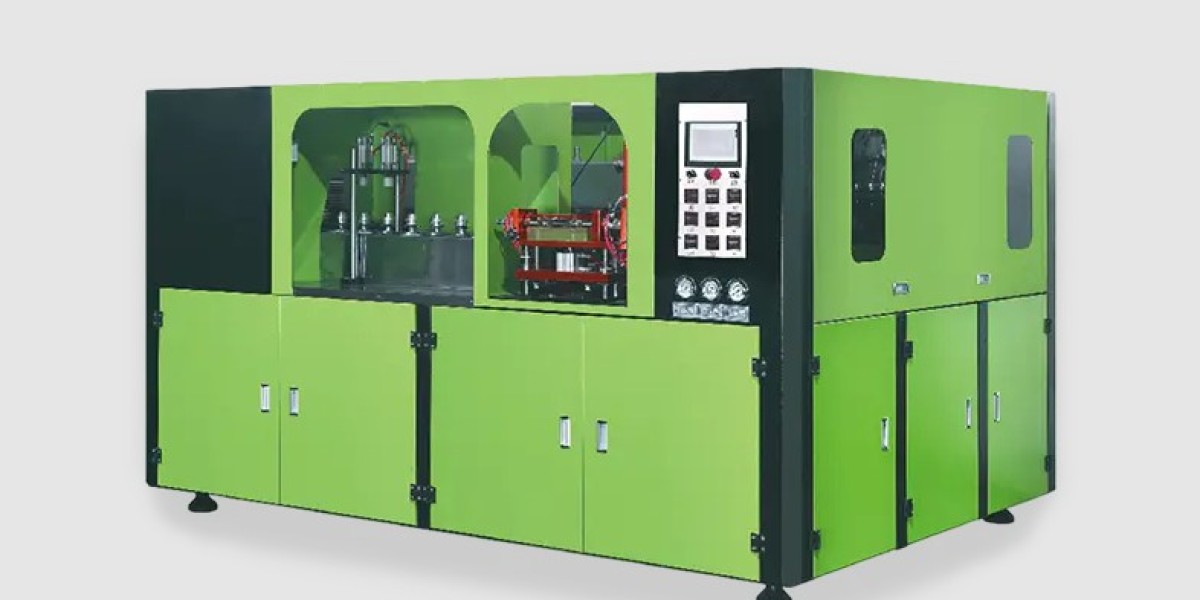
Bottle shape is more than a visual design choice; it directly influences how blowing machines are configured and operated. When manufacturers use both a Wide-Mouth Bottle Blowing Machine and an Edible Oil Bottle Blowing Machine, mold design becomes a focal point for balancing function, efficiency, and consistency across different product lines.
Wide-mouth bottles are often selected for products that require easy access or pouring control. Their larger openings change how material flows during stretching and blowing. Molds for these bottles must guide the softened preform evenly into the cavity while maintaining neck accuracy. Even minor misalignment can lead to sealing issues during capping.
Edible oil bottles typically emphasize controlled pouring and stable storage. Their shapes are often taller and narrower, which places different demands on mold construction. Vertical alignment, shoulder transitions, and base support all influence how the bottle behaves once filled. Molds must accommodate these requirements while allowing efficient cooling.
Mold material selection affects heat transfer and surface finish. Aluminum alloys are commonly used due to their balance of durability and thermal conductivity. Surface treatment of mold cavities influences bottle clarity and release behavior, which affects cycle stability during long production runs.
Vent design within molds is another important factor. Proper venting allows trapped air to escape during blowing, ensuring complete cavity filling. Wide-mouth molds may require different vent placement due to their geometry, while oil bottle molds often focus on base and shoulder venting.
Changeover efficiency matters when facilities produce multiple bottle types. Modular mold designs and standardized mounting systems help reduce downtime. A blowing machine capable of accommodating both wide-mouth and oil bottle molds supports flexible production planning without extensive mechanical adjustments.
Bottle stability after demolding depends on how evenly material cools. Asymmetrical cooling can introduce internal stresses, which may become visible during filling or storage. Mold cooling channels are therefore carefully designed to balance heat removal across the bottle surface.
Design tolerances influence long-term performance. Bottles that appear acceptable visually may still experience issues if tolerances are too tight or inconsistent. Experienced manufacturers consider not only initial appearance but also how bottles behave throughout their lifecycle.
Inspection processes often reflect mold design priorities. Wide-mouth bottles may undergo checks for opening roundness and thread definition, while oil bottles are commonly evaluated for vertical load resistance and leak performance. These criteria guide mold refinement over time.