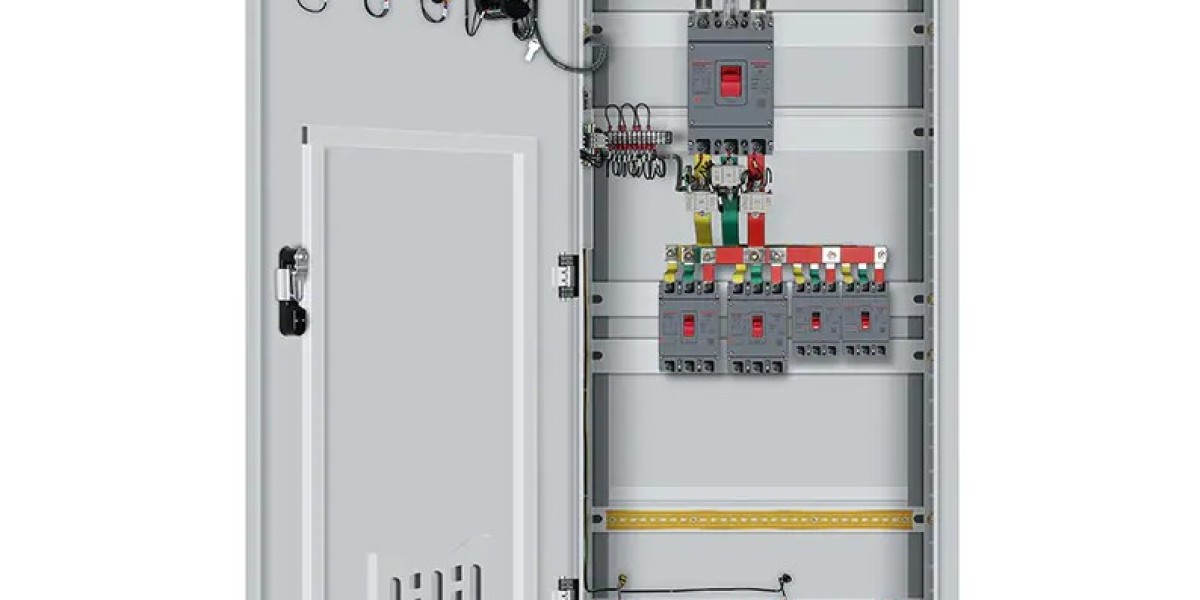
Electrical protection forms the backbone of safe pump system operation. Within a typical installation, a Distribution Box Set and a Water Pump Control Panel share responsibility for protecting equipment, operators, and surrounding infrastructure from electrical faults. This shared role reflects layered protection principles rather than redundancy.
Distribution boxes commonly house primary protective devices such as circuit breakers or fuses. These components respond to overloads or short circuits by interrupting power flow before damage spreads. Each outgoing circuit is protected individually, allowing faults to be isolated without shutting down the entire system.
Control panels implement protection at the operational level. Motor overload relays, phase loss detectors, and thermal sensors monitor pump behavior during operation. When abnormal conditions occur, the control panel can stop the pump and signal alarms, preventing prolonged stress on mechanical components.
Coordination between protection layers is important. Primary protection in the distribution box responds to severe electrical faults, while control panel protection addresses operational anomalies. Proper coordination ensures that protective actions occur in a logical sequence rather than simultaneously.
Environmental exposure influences protection requirements. Outdoor pump stations may face moisture, dust, or temperature fluctuations. Enclosures for both distribution boxes and control panels are selected to protect internal devices under these conditions. Sealing methods and enclosure ratings help maintain protection integrity.
Electrical standards guide the selection and placement of protective devices. Compliance with applicable codes ensures that systems meet safety expectations and reduces liability risks. Distribution boxes and control panels are designed with these standards in mind, supporting consistent installation practices.
Protection devices also support maintenance activities. Technicians can isolate circuits using breakers within the distribution box before working on control panels or pumps. This capability reduces reliance on upstream disconnects and improves safety during service.
Monitoring features extend protection beyond immediate fault response. Control panels may include indicators or communication interfaces that report status information. Early detection of abnormal trends allows corrective action before faults escalate.
Load variability is another factor. Pumps may experience changing loads due to system demand or environmental conditions. Protective settings are selected to accommodate normal variations while responding appropriately to sustained abnormalities.