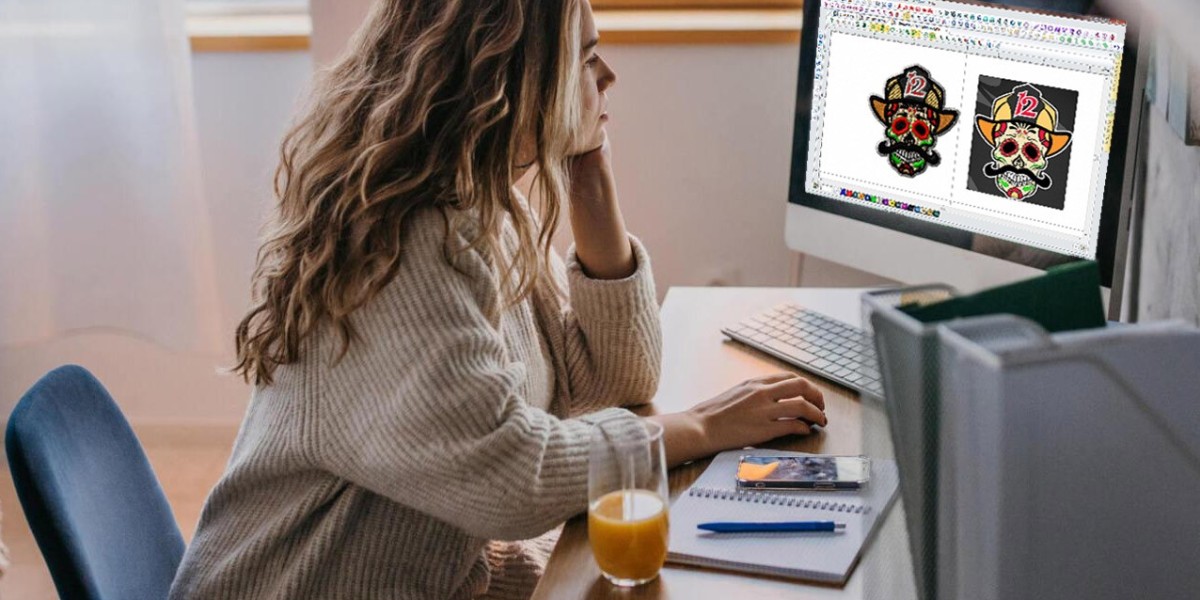
Hey there, digitizers and embroidery pros! Converting a photograph—whether it's a family portrait, pet picture, vintage snapshot, or moody artistic shot—into a clean, production-ready DST file still ranks among the most requested (and most challenging) tasks in the embroidery world. In 2026, with sharper auto-digitizing algorithms, better fabric simulation, and improved blending tools, the process has become noticeably smoother, but it still rewards careful planning and manual refinement. Whether you're creating realistic pet patches, memorial keepsakes, or trendy photo-stitch streetwear, getting the conversion right means the difference between a muddy, over-stitched result and a portrait that looks hand-stitched with depth and personality. This complete guide walks you through the modern workflow so you can convert photo to DST format with confidence and deliver stitch-outs that genuinely impress.
Why DST Remains the Commercial Go-To in 2026
DST (Data Stitch Tajima) continues to dominate professional embroidery because almost every major multi-head brand—Tajima, Barudan, Happy, SWF, Brother commercial heads, and most Chinese machines—reads it natively or with zero issues. The format is tiny, efficient, and contains only essential stitch data: needle coordinates, color changes, trims, jumps, and stop commands.
That simplicity translates to blazing speed on production floors. DST files load instantly, process quickly, and allow machines to run at full RPM with minimal interruptions. For photo-stitch work, where stitch counts often climb into the tens of thousands, that efficiency matters. Shops that standardize on DST see faster throughput, lower thread waste, and fewer operator interventions—key factors when you're turning around dozens of portrait orders a week.
The Unique Challenges of Photograph Conversion
Photographs are far more demanding than logos or clipart. You're dealing with thousands of tonal variations, subtle gradients, shadows, highlights, and fine details that must be approximated with thread. Auto-digitizing tools still tend to over-stitch skin tones (creating a heavy, plastic look) or lose delicate facial features in dense fills.
The goal isn't photo-realism—thread simply can't replicate pixels—but a pleasing, artistic interpretation that retains recognizability and emotional impact. In 2026, the best results come from blending several techniques: dithered fills for smooth shading, directional satin for highlights, running stitches for fine outlines, and strategic open areas to prevent the piece from feeling too heavy.
Prepping the Photograph for Best Results
Start with ruthless image preparation. Open the photo in any editor and follow these steps:
- Crop tightly to the most important area (usually face and shoulders for portraits)
- Increase contrast and clarity so facial features stand out
- Convert to grayscale temporarily to judge tonal range
- Reduce overall brightness/contrast if highlights are blown out
- Apply gentle sharpening to define eyes, nose, mouth, and hair edges
- Resize to the intended stitched size (typically 4–8 inches wide for portraits)
Avoid heavy filters or dramatic edits—over-processed photos often digitize worse than natural ones. Save a high-resolution version for tracing reference.
Choosing Software That Handles Photos Well
In 2026, three programs stand out for photo-to-DST work:
- Wilcom EmbroideryStudio – unmatched control over dither patterns and blending
- Hatch Embroidery – excellent auto photo-stitch with manual override options
- Ink/Stitch – free, surprisingly capable at dithered fills and directional satin
All three offer realistic 3D simulation so you can see how light and shadow will translate before committing thread. If budget allows, Wilcom or Hatch usually produce the cleanest, fastest-running photo files.
Step-by-Step Photo-to-DST Workflow
- Import the prepped photo and lock it as a background reference.
- Run auto photo-stitch to generate a starting point (most programs offer several dither styles—choose the one closest to your vision).
- Immediately switch to manual mode and create separate objects for major tonal regions: darkest shadows, mid-tones, highlights, hair, eyes, mouth.
- Use directional satin or running stitches for high-contrast edges (eyes, nose outline, hair strands).
- Fill mid-tone and shadow areas with dithered tatami or stipple fills—vary stitch angle and length to mimic natural shading.
- Add light satin outlines around facial features to improve definition.
- Build underlay layers carefully—light lattice under dithered fills prevents sinking, while directional underlay helps control pull.
- Apply subtle pull compensation on larger fill areas to keep the portrait flat.
- Optimize paths aggressively: branch connections, hide travels under denser regions, minimize jumps.
- Sequence colors from dark to light (common photo-stitch convention).
- Preview in realistic 3D—adjust density until skin tones look smooth but not over-stitched.
- Export as DST with correct hoop size and centering.
Save the working file separately so you can tweak for different sizes later.
Testing and Final Adjustments
Always stitch a sample on the exact fabric you'll use in production. Photo-stitch is especially sensitive to stabilizer type and hoop tension. Test on a light stabilizer sandwich first, then rinse and dry to check how the piece relaxes.
Common adjustments after testing:
- Too heavy or plastic-looking → reduce density in mid-tone fills
- Facial features lost → strengthen satin outlines or add light running detail
- Curling or distortion → add directional underlay or lower overall density
- Thread breaks in dense areas → shorten stitch length or open up fill patterns
Iterate until the sample looks balanced and recognizable even from a distance.
Quick Habits That Elevate Photo-Stitch Quality
- Keep total stitch count reasonable (40,000–80,000 for most portraits)
- Use variegated or skin-tone thread sets for smoother transitions
- Vary stitch angles across the face to mimic natural light fall-off
- Add a light satin outline around the entire portrait for definition
- Always test dissolving stabilizer compatibility early
These small choices turn average photo-stitch into pieces that feel hand-crafted.
Conclusion
Converting photographs into DST embroidery files has become far more approachable in 2026 thanks to better auto-stitch starters, realistic previews, and refined dithering tools. With clean image prep, layered underlay, strategic satin and fills, careful pathing, and thorough testing, you can create portrait patches, pet tributes, or artistic apparel that genuinely moves people. The key is treating photo-stitch as an artistic interpretation rather than a literal copy—focus on light, shadow, and emotion rather than perfect pixel matching.
Grab your next meaningful photo, open your digitizing software, and start building that DST file. With patience and practice, you'll turn pixels into threads that tell stories—one thoughtful stitch at a time.