An AAC cable (All Aluminum Conductor) is one of the most widely used overhead conductors for low- to medium-voltage power distribution networks, especially in urban and coastal environments. For utilities, EPC contractors, and industrial power developers, AAC cable offers a practical balance between electrical performance, lightweight construction, and cost efficiency.
As a global manufacturer of overhead conductors and power cables, HNBF Power supplies engineered AAC cable solutions designed to meet the real operational demands of modern transmission and distribution systems.
In this guide, engineers and procurement professionals will gain a clear understanding of how AAC cable works, where it performs best, and how to select the right specification for utility projects.
What Is an AAC Cable?
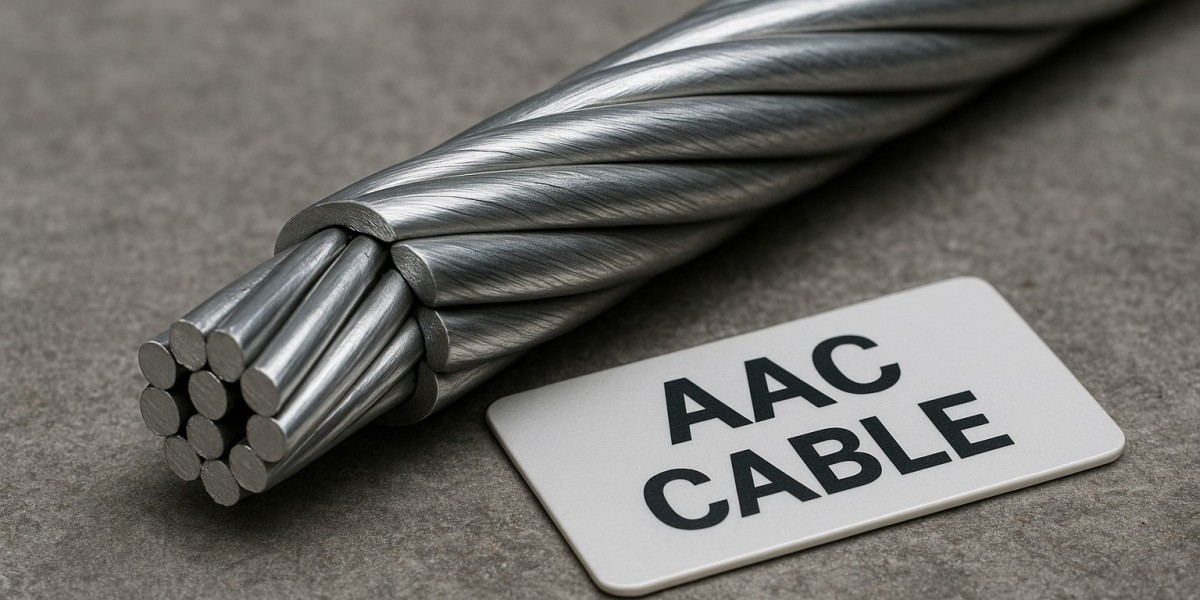
AAC cable stands for All Aluminum Conductor, consisting entirely of one or more strands of hard-drawn aluminum wires. Unlike ACSR or AAAC conductors, AAC cable contains no steel core or alloy reinforcement.
This design focuses on maximizing electrical conductivity while maintaining a lightweight structure.
Key Construction Characteristics
100% aluminum stranded conductor
Concentric lay design for mechanical stability
Non-magnetic and corrosion-resistant material
Simple structure for easy handling and installation
Because of its high aluminum content, AAC cable delivers excellent current-carrying performance per unit weight.
Technical Advantages of AAC Cable for Utility Networks
From an engineering perspective, AAC cable offers several practical advantages in specific grid environments.
High Electrical Conductivity
AAC cable provides higher conductivity compared with many reinforced conductors of the same cross-section. This allows utilities to:
reduce energy losses in short and medium spans
achieve higher ampacity where mechanical loads are moderate
Lightweight Structure
The absence of a steel core makes AAC cable significantly lighter than ACSR. This reduces:
tower and pole loading
installation tension requirements
overall installation cost
Excellent Corrosion Resistance
In coastal, industrial, and humid environments, AAC cable performs well due to the natural corrosion resistance of aluminum. This is a major reason it remains popular in:
coastal cities
port infrastructure
chemical and industrial parks
Typical Applications of AAC Cable
AAC cable is best suited for distribution and short-span transmission lines where mechanical strength is not the primary design constraint.
Common Use Cases
urban overhead distribution networks
substations and feeder connections
industrial park power supply lines
municipal utility upgrades
short-distance transmission routes
For long-span or high mechanical load corridors, utilities often prefer ACSR or AAAC. However, for compact networks with lower tension requirements, AAC cable remains a highly efficient and economical solution.
AAC Cable vs ACSR and AAAC: Engineering Comparison
Understanding the difference between conductor types helps engineers select the right solution for each project.
AAC Cable
highest conductivity per unit weight
lowest mechanical strength
ideal for short spans and light loading
AAAC Cable
improved strength using aluminum alloy
good corrosion resistance
suitable for medium spans
ACSR Cable
steel-reinforced core for high tensile strength
best for long spans and heavy mechanical loads
widely used in transmission corridors
For distribution-focused projects, AAC cable often provides the most cost-effective and electrically efficient option.
Standards and Specifications for AAC Cable
Professional procurement teams should always confirm compliance with recognized international standards.
HNBF Power manufactures AAC cable in accordance with major industry standards, including:
IEC standards for overhead conductors
ASTM requirements for aluminum wires and stranding
utility-specific technical specifications
Available parameters typically include:
conductor size and cross-section
number of aluminum strands
rated current capacity
DC resistance values
overall diameter and weight
These parameters allow precise integration into utility network designs and load calculations.
Manufacturing Quality of AAC Cable at HNBF Power
As a dedicated global supplier of overhead conductors and power cables, HNBF Power applies strict production and quality control procedures to every AAC cable order.
Production Capabilities
precision aluminum wire drawing
automated stranding and compaction lines
online diameter and surface inspection
full electrical and mechanical testing
Every AAC cable supplied by HNBF Power is manufactured to deliver consistent conductivity, uniform strand tension, and stable long-term performance under real operating conditions.
For EPC contractors and utility buyers, this manufacturing consistency reduces project risk and simplifies site installation planning.
How to Select the Right AAC Cable for Your Project
Selecting the correct AAC cable should always be based on both electrical and mechanical design requirements.
Key Engineering Factors to Consider
span length and sag limitations
required current-carrying capacity
local wind and ice loading conditions
installation method and hardware compatibility
environmental exposure (coastal or industrial zones)
While AAC cable performs exceptionally well electrically, it should only be specified where mechanical loads remain within safe limits.
HNBF Power supports project teams with conductor selection guidance, load calculations, and customized specifications for distribution and utility infrastructure projects.
Why Utilities and EPC Contractors Choose HNBF Power for AAC Cable
With a complete portfolio including AAC, AAAC, ACSR, ABC, LV power cable, and concentric cable, HNBF Power provides an integrated supply solution for transmission and distribution projects.
Buyers benefit from:
stable global manufacturing capacity
consistent compliance with international standards
project-oriented packaging and logistics support
technical documentation for design and approval stages
This makes HNBF Power a reliable long-term partner for power utilities, engineering firms, and infrastructure contractors worldwide.
FAQs About AAC Cable
1. Is AAC cable suitable for long-span transmission lines?
AAC cable is generally not recommended for long spans. Due to its lower tensile strength, ACSR or AAAC conductors are more suitable for long-distance or high-load transmission lines.
2. Can AAC cable be used in coastal environments?
Yes. AAC cable offers excellent corrosion resistance and is commonly used in coastal and high-humidity areas where steel-reinforced conductors may require additional protection.
3. What is the main advantage of AAC cable over ACSR?
The main advantage of AAC cable is higher electrical conductivity per unit weight and a lighter structure, which makes installation easier for short-span distribution networks.
4. Does HNBF Power provide customized AAC cable specifications?
Yes. HNBF Power supplies customized AAC cable solutions based on conductor size, standard requirements, and project-specific electrical and mechanical parameters.
Partner with HNBF Power for Your AAC Cable Projects
If you are planning a distribution network upgrade or a new utility infrastructure project, choosing the right AAC cable is critical for performance, reliability, and lifecycle cost.
Contact HNBF Power today to discuss your project requirements and receive customized AAC cable solutions engineered to meet your technical standards, installation conditions, and procurement timelines.