If you've been following the Salesforce ecosystem over the past year, you've probably heard the term "Agentforce" more times than you can count. But in 2026, it's no longer just a buzzword — it's a fundamental shift in how businesses operate. With $1.4 billion in annual recurring revenue and over 18,500 deals closed, Agentforce has become one of the fastest-growing products in Salesforce history.
But what exactly is the agentic enterprise, and why should you care? Let's break it down.
What Is Agentforce, Exactly?
At its core, Agentforce is Salesforce's platform for building and deploying autonomous AI agents within your CRM ecosystem. Unlike traditional chatbots that follow rigid scripts, these agents can understand context, make decisions, and take action across your business workflows — from handling customer service inquiries to qualifying sales leads, to orchestrating complex marketing campaigns.
Think of it this way: where previous Salesforce AI features like Einstein acted as a helpful assistant making suggestions, Agentforce agents are more like skilled team members who can independently handle tasks from start to finish, escalating to human oversight only when necessary.
The Five Pillars of the Agentic Enterprise
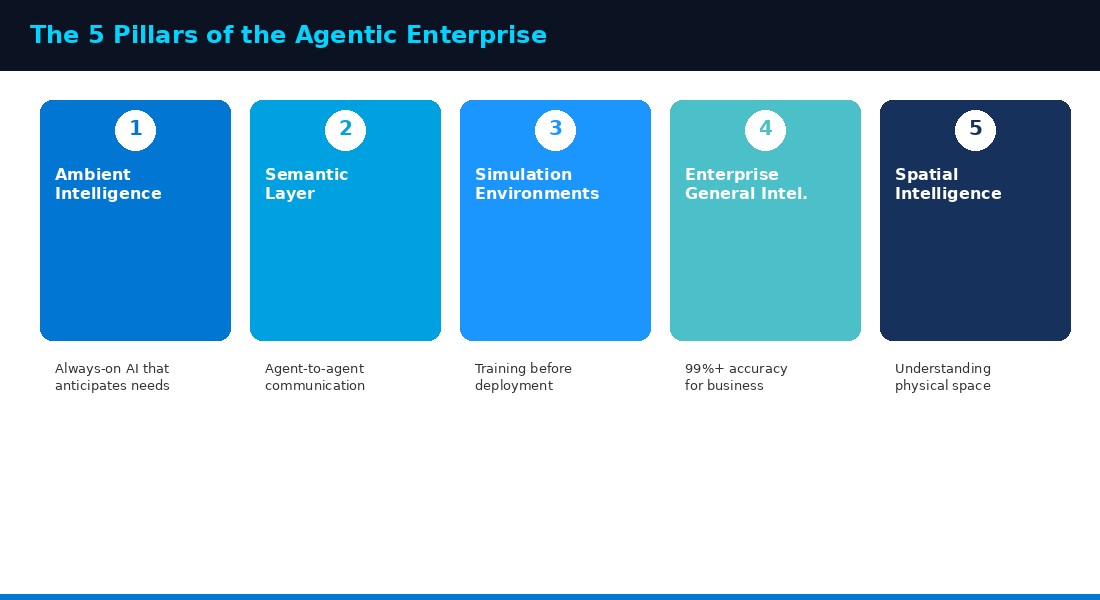
Salesforce Chief Scientist Silvio Savarese recently outlined five transformative trends that are shaping the agentic enterprise in 2026. These aren't theoretical — they're being built into the platform right now.
1. Ambient Intelligence
The first major shift is from reactive AI to always-on intelligence. Rather than waiting for a user to type a prompt, Agentforce agents operate continuously in the background — monitoring sales conversations, flagging service risks, and surfacing insights before you even think to ask. Imagine a service agent that detects a customer's frustration from their email tone and automatically escalates their case before it becomes a complaint. That's ambient intelligence in action.
2. The Semantic Layer for Agent Collaboration
This is where things get genuinely interesting. In 2026, Salesforce is rolling out a semantic communication layer that allows AI agents from different organizations to talk to each other. Think about a car purchase scenario: an insurance agent, a lending agent, and a dealer service agent could coordinate automatically — negotiating terms, verifying trust, and sharing relevant data — all through a shared vocabulary and standardized protocols.
3. Simulation Environments
One of the biggest lessons from 2025 was that AI agents need "flight hours" before they go live. Salesforce learned the hard way that agents could behave inconsistently, sometimes giving different answers to the same question. The solution? Simulation environments (called eVerse) where agents train in realistic synthetic scenarios before they ever touch a real customer interaction. Think of it as a flight simulator for your AI workforce.
4. Enterprise General Intelligence (EGI)
Forget the hype around AGI — what businesses actually need is Enterprise General Intelligence. This means AI that's reliably excellent at specific business tasks, hitting 99%+ accuracy in mission-critical operations. Salesforce is building enterprise-specific benchmarks to measure this, because a 95% accuracy rate might sound impressive until you realize it means 1 in 20 customer interactions goes wrong.
5. Spatial Intelligence
The final frontier is AI that understands the physical world. Through world models and spatial reasoning, agents will be able to assist with field service diagnostics, logistics planning, and even personalized retail experiences by understanding three-dimensional space and physical relationships.
The Numbers Don't Lie
Agentforce isn't just promising — it's delivering measurable business results that have caught the attention of Wall Street and enterprise buyers alike.
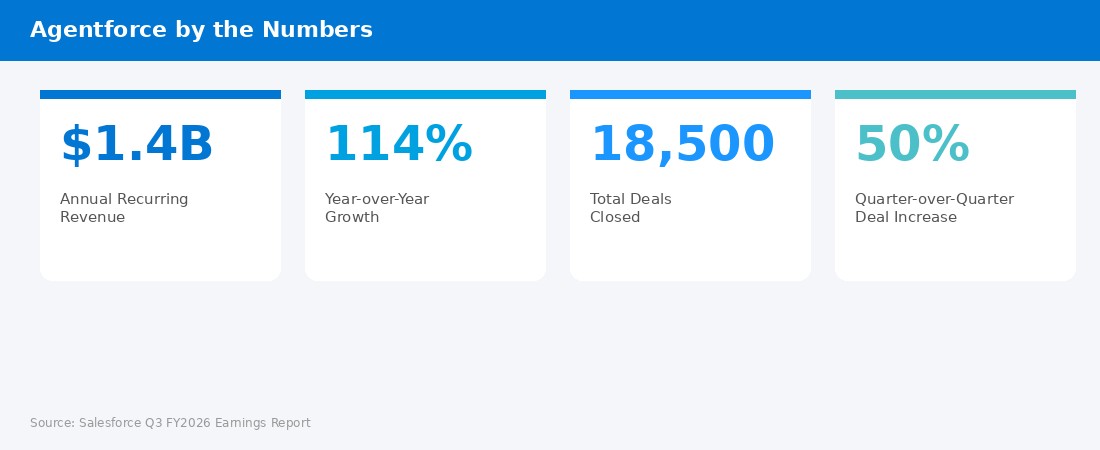
The 114% year-over-year growth in ARR is particularly striking when you consider that Salesforce launched Agentforce less than two years ago. This kind of adoption velocity is nearly unprecedented in enterprise SaaS, signaling that businesses aren't just experimenting — they're going all-in on agentic AI.
How Humans and AI Agents Work Together
One common misconception about Agentforce is that it's designed to replace human workers. The reality is more nuanced and, frankly, more interesting. The agentic enterprise model is built on a collaboration framework where humans and AI agents each play to their strengths.
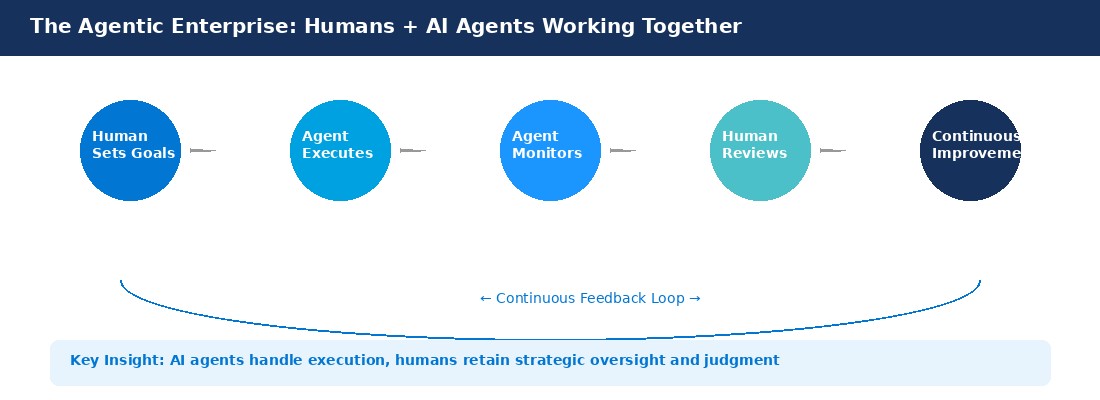
In practice, this means humans focus on strategy, complex judgment calls, and creative problem-solving, while AI agents handle the execution, monitoring, and routine decision-making that would otherwise consume hours of your team's day. The continuous feedback loop ensures that agents get better over time while humans always retain oversight and control.
The Agent Script Story: A Lesson in Pragmatism
It's worth being honest about the growing pains. In 2025, many organizations discovered that Agentforce, when given too much autonomy, could hallucinate or behave inconsistently. Salesforce responded by introducing Agent Script — a rule-based scripting layer that lets companies define step-by-step logic so their AI agents behave more predictably.
Some critics called this a step backward from the "autonomous AI" promise. But seasoned Salesforce professionals see it differently: it's a sign of maturity. The most successful Agentforce deployments in 2026 combine the flexibility of AI reasoning with the reliability of structured workflows. You get the best of both worlds — intelligent agents that still follow your business rules.
What This Means for Salesforce Professionals
If you work in the Salesforce ecosystem, the rise of Agentforce creates both opportunities and challenges. The demand for professionals who can design, deploy, and manage AI agents is surging. Data architecture skills, in particular, are becoming essential — because an agent is only as good as the data it operates on.
Generalists are having a harder time. The market is rewarding specialization, particularly in areas like AI agent configuration, data engineering within Salesforce, and the intersection of business process design and AI orchestration. If you're looking to future-proof your career, investing in Agentforce certifications and data skills is one of the smartest moves you can make right now.
Looking Ahead: The Rest of 2026
With the Spring '26 release already rolling out new capabilities — including Agentforce Marketing (formerly Marketing Cloud Next) and enhanced simulation tools — the pace of innovation shows no signs of slowing. Expect to see deeper integration between Agentforce and Data Cloud, more industry-specific agent templates, and expanded multi-agent orchestration capabilities throughout the year.
The agentic enterprise isn't a distant future — it's happening right now. And for businesses that get it right, the competitive advantages are going to be substantial.