
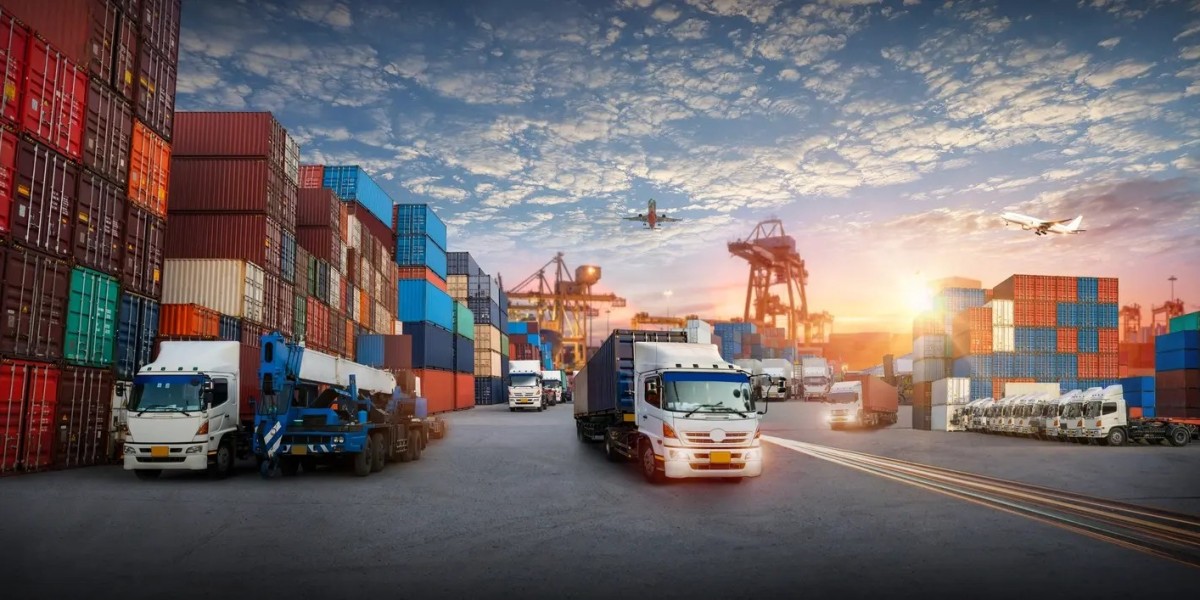
For American businesses navigating the complexities of modern commerce, the supply chain is no longer a linear path from point A to point B. It is a dynamic, interconnected web of freight movements, warehouse activities, and data flows that must operate in perfect harmony. When these elements are managed in silos, inefficiencies multiply. A delayed freight shipment disrupts warehouse receiving schedules, which in turn throws off inventory availability and delays customer orders. To solve this integration challenge, a growing number of U.S. enterprises are turning to end-to-end Logistics Business Process Outsourcing (BPO) solutions. These comprehensive partnerships provide unified management of both freight and warehouse operations, creating a seamless, efficient, and intelligent supply chain backbone.
The Integration Imperative: Why End-to-End Matters
The traditional approach to logistics often involves managing transportation with one set of tools and warehouse operations with another, leading to fragmented visibility and finger-pointing when problems arise. End-to-end logistics BPO breaks down these silos by placing a single provider in charge of the entire operational spectrum—from the moment a shipment leaves a supplier to the second it is picked, packed, and shipped from a warehouse . This holistic model ensures that data flows seamlessly between freight execution and warehouse management, enabling proactive decision-making and eliminating the delays caused by disconnected systems .
Comprehensive Scope: Unifying Freight and Warehouse Operations
A true end-to-end logistics BPO solution encompasses the full lifecycle of goods movement and storage, providing a single point of accountability for results.
Freight and Transportation Management
In the freight domain, advanced BPO providers act as an extension of a company's logistics team, handling the tactical heavy lifting of moving goods . This includes:
AI-Powered Planning and Procurement: Centralizing supplier networks, streamlining rate management, and using intelligent recommendation engines to assign the best carrier for each load based on historical performance and real-time rates. This approach can lead to freight bookings that are 60% faster .
End-to-End Freight Execution: Managing the full complexity of North American shipping, including FTL, LTL, intermodal, and cross-border movements. Providers offer dedicated control towers that provide real-time, granular visibility into shipments, with dynamic ETAs refreshed every few minutes using GPS and milestone data .
Freight Audit and Payment: Automating the validation of invoices against proof of delivery and accessorial charges using AI. This can cut processing time by 80% and save up to 3% on total freight spend by catching discrepancies .
Warehouse and Fulfillment Operations
On the warehouse side, end-to-end BPO solutions manage the physical infrastructure and processes that turn inventory into orders . Key capabilities include:
Comprehensive Inventory Management: Providing real-time visibility into stock levels, locations, and movement. This is supported by robust systems for tracking, cycle counting, and ensuring inventory accuracy.
Value-Added Fulfillment Services: Handling the full spectrum of warehouse activities, including pick and pack, kitting and assembly, cross-docking, labeling, and returns processing .
Flexible Space and Scalable Operations: Offering flexible warehousing contracts that can expand or contract based on seasonal needs, allowing businesses to avoid the fixed costs of maintaining their own facilities .
Quantifiable Business Benefits: Efficiency, Cost Savings, and Intelligence
The integration of freight and warehouse operations under a single BPO umbrella delivers tangible, measurable results.
Significant Cost Reduction: By optimizing both transportation and warehouse processes, companies achieve substantial savings. For example, using AI-powered freight audit and validation can directly reduce freight spend by up to 7% . On the warehouse side, outsourcing eliminates the high fixed costs of facilities and full-time staff, converting them into variable expenses that scale with volume . The use of regional parcel carriers optimized by BPO expertise has been shown to deliver 20-30% cost savings for parcel deliveries .
Dramatic Efficiency Gains: Specialized BPO providers drive massive improvements in operational speed and accuracy. Freight forwarders partnering with logistics BPO firms have reported a 40% increase in document processing speed and a 25% reduction in billing errors within the first 60 days . In warehouse operations, this efficiency translates to faster order fulfillment, reduced picking errors, and optimized labor utilization.
Enhanced Visibility and Business Intelligence: End-to-end solutions create a centralized repository of normalized data across both freight and warehouse activities . This rich dataset enables advanced reporting on metrics like on-time delivery, carrier performance, landed costs, and even carbon emissions . This intelligence transforms logistics from a cost center into a source of strategic insight for the entire business.
Real-World Validation: The Toyota Case Study
The power of integrated logistics BPO is powerfully illustrated by Toyota's North American Parts Operations (NAPO). Managing a vast network of 17 distribution centers and shipments from 35 different carriers, Toyota faced the challenge of gaining clarity from immense complexity. They partnered with Cass Information Systems for freight invoice management and auditing .
The results went far beyond simple cost control. By outsourcing this function, Toyota gained a centralized data warehouse of normalized expense information. This newfound business intelligence became the catalyst for a major Kaizen (continuous improvement) project. Using data from the BPO provider, Toyota analyzed and improved processes with a key carrier, boosting their successful throughput from a benchmark of 8% to over 95% . This case demonstrates how an end-to-end BPO partnership can provide not just operational efficiency, but the data foundation for driving enterprise-wide excellence.
The Strategic Advantage: Scalability and Focus
In today's volatile market, the ability to scale logistics operations up or down is a critical competitive advantage. End-to-end BPO solutions provide this flexibility effortlessly. During peak shipping seasons, providers can rapidly scale teams to handle the increased volume, adding trained specialists in weeks rather than months . Once the peak passes, operations scale back down without the burden of layoffs or severance.
Ultimately, outsourcing the end-to-end logistics function allows U.S. businesses to focus on their core competencies—product innovation, sales, and customer relationships. By entrusting the complexity of freight and warehouse operations to dedicated experts, companies free up internal leadership to drive strategic growth, secure in the knowledge that their supply chain is running smoothly, efficiently, and intelligently .
Conclusion
End-to-end Logistics BPO solutions in the United States represent a paradigm shift in how businesses manage their supply chains. By unifying freight and warehouse operations under a single, expert-led partnership, companies can achieve a level of integration, efficiency, and intelligence that is impossible with fragmented in-house models. From the AI-powered freight optimization of Nuvocargo to the flexible warehousing of OpTech and the data-driven transformations seen at Toyota , the evidence is clear: end-to-end BPO is the definitive strategy for building a resilient, cost-effective, and future-ready supply chain.