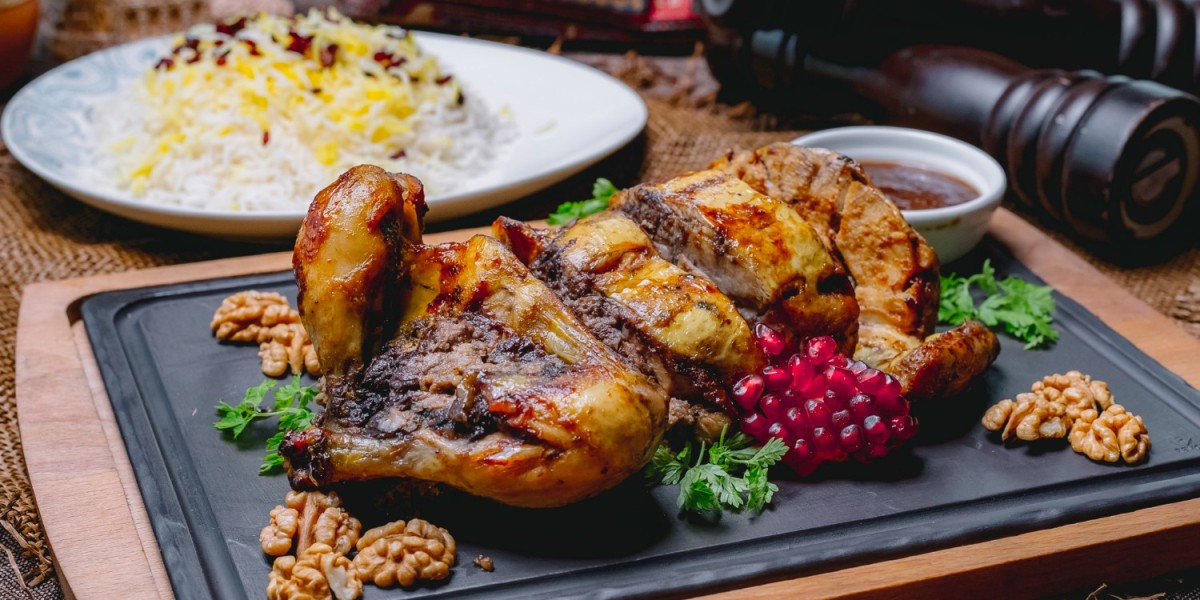
Lebanese charcoal chicken is built on a marinade of seven-spice, lemon, garlic, and olive oil — then cooked low and slow over real coals until the outside charms and the inside stays completely juicy. The technique matters just as much as the ingredients. Eat it with toum, pickled turnips, and flatbread and it becomes a full Lebanese meal rather than just grilled meat. For anyone in Sydney who'd rather skip the grill, Parramatta Restaurant in Surry Hills is where Lebanese charcoal chicken is done properly — no compromises.
The Smell That Stops You Dead in Your Tracks
It gets you before you even realise it. One second you're walking, minding your own business — next second your nose catches something smoky, something rich, and your feet slow down on their own. That's chicken charcoal doing what it's always done. And if you grew up in a Lebanese household, your whole body already knows what comes next.
Dajaj mashwi. Lebanese charcoal chicken. Call it what you want — the point is the same. It's the dish that clears your schedule, pulls cousins out of their rooms, and turns a regular Sunday into something people talk about for days. This guide is going to show you how to make it the right way. Not a shortcut version. The real one.
What Makes Lebanese Charcoal Chicken Different?
Here's the thing about chicken charcoal — it's not a cooking method you can fake or substitute your way around. Gas grills don't do what coals do. The smoke that comes off real charcoal when fat hits it? That's a flavour you either have or you don't. Lebanese charcoal chicken lives and dies on that difference.
The Charcoal Factor
When the bird's fat starts rendering and dripping down onto hot coals, it vaporises in seconds and comes straight back up as smoke. That smoke clings to the skin and keeps building throughout the whole cook. Strip that out — use a gas burner, use an oven, use anything else — and you've made a completely different dish.
The Lebanese Spice Philosophy
Lebanese cooking isn't about making food fiery. It never was. Seven-spice, cumin, turmeric, cinnamon, black pepper — each one plays a specific role in a Lebanese charcoal chicken marinade, and none of them are there just to burn your mouth. The goal is depth. Something that builds slowly and keeps tasting better three bites in than it did on the first one.
The Authentic Lebanese Charcoal Chicken Marinade
Most people underestimate the marinade step — they mix it, they rub it on, and they call it done. But a marinade that only coats the surface is doing about half the job it should. Score the meat properly, give it real time in the fridge, and suddenly you're not just flavouring skin — you're flavouring the whole bird.
Ingredients You Will Need
For a whole chicken around 1.5 kg — three tablespoons of olive oil to start. Juice of two lemons, squeezed fresh, not from a bottle. Six garlic cloves, crushed hard so the oils actually release. One and a half teaspoons of seven-spice, one teaspoon each of cumin and turmeric, half a teaspoon of cinnamon, half a teaspoon of cracked black pepper, one teaspoon of salt. Sweet paprika — a teaspoon — is optional, but it gives the skin that deep orange-red colour on the grill that makes people stop and stare.
How to Prepare the Marinade
Combine everything and work it into a rough paste — it won't be smooth and it doesn't need to be. Take your knife and score the chicken. Real cuts, not scratches — deep into the thighs, through the legs, across the breast. Push the marinade into every cut with your fingers. Cover the tray tight and put it in the fridge. Overnight. Not two hours. Not four. Overnight. The chicken you pull out the next morning is genuinely a different product.
Step-by-Step: How to Cook Lebanese Charcoal Chicken
The grill is where most people wreck an otherwise great bird. Too much heat too fast — outside burns, inside stays raw, and suddenly the whole overnight marinade feels like a wasted effort. Chicken charcoal cooking has one real rule: slow down and trust the process.
Setting Up Your Charcoal Grill
Light the coals early — 30 to 40 minutes before the chicken ever touches the grill. You're waiting for white-ash coals, steady and even, not a fire that looks like something from a campsite disaster. Build two zones: direct heat on one side, indirect on the other. You'll start on one and finish on the other.
Spatchcock for Even Cooking
Pull the backbone out and press the bird completely flat — this isn't optional if you want even cooking. Every part of the chicken now makes contact with the grill at the same level. The skin crisps across the whole surface at once. And it cooks faster, which means less time watching it and more time setting the table.
The Cooking Process
Skin-side down over direct heat first — eight to ten minutes, let it build a proper char. Then shift the whole bird to indirect heat, drop the lid, and walk away for 25 to 35 minutes. One flip. That's all it needs. Internal temperature at the thigh should hit 75°C before it comes off the grill. Rest it ten full minutes before you cut it — this part is non-negotiable.
Essential Accompaniments for Lebanese Charcoal Chicken
You could eat Lebanese charcoal chicken on its own and it would still be good. But that's not how it's eaten — not in any Lebanese household, not at any proper spread. The sides aren't extras. They're part of what the dish actually is.
Toum: The Garlic Sauce You Cannot Skip
Four ingredients — garlic, lemon, oil, salt — whipped into a sauce so sharp and creamy it'll make your eyes water. Toum does something to chicken charcoal that nothing else comes close to. It cuts through the fat, it lifts the smokiness, it makes every bite feel complete. No toum on the table means someone is already getting up to find it.
What to Serve Alongside
Warm flatbread first, always. Then a salad — cucumber, tomato, lemon juice, dried mint, done. Add kabees lift — pickled turnips, bright pink, with a sharpness that hits differently next to charred meat. Flat-leaf parsley, scattered across everything at the end. Simple. But try eating Lebanese charcoal chicken without any of it and see how the meal feels.
Tips for Getting the Best Results at Home
You don't need expensive equipment to cook chicken charcoal well at home. What you need are the right habits — the ones that separate a bird that's just cooked from one that's actually worth making again:
- Free-range, bone-in chicken only — supermarket fillets don't handle charcoal heat the same way.
- Overnight in the marinade isn't a preference. It changes the result in ways that four hours simply doesn't.
- Score deep — if the knife isn't reaching the bone, the marinade isn't either.
- Lump charcoal, not briquettes. The flavour difference is noticeable and not worth skimping on.
- Rest the bird ten minutes after it comes off the grill, every single time — no exceptions.
- Keep a water spray bottle next to the grill. Flare-ups are fast and they burn the skin before you can react.
- Medium heat, start to finish. The single most important thing about cooking this dish well.
Lebanese Charcoal Chicken Pieces: A Weeknight-Friendly Version
A whole spatchcocked bird on a Wednesday night isn't always realistic — work ran late, the kids are already hungry, and nobody wants to wait 45 minutes. Chicken thighs and drumsticks solve all of that. Same marinade, same flavour, a third of the time. Honestly, bone-in thighs might actually be the best cut for this marinade — they absorb it fast and they're nearly impossible to dry out.
The Case for Chicken Pieces
Thighs have enough fat in them to stay juicy over high heat without needing constant attention. Two hours in the marinade gets you real depth — you're not waiting on twelve hours here. And they go from grill to plate in under 30 minutes, which on a weeknight is the whole game.
Quick Marinade for Pieces
Same ingredients, slightly smaller quantities for the pieces you're cooking. Coat everything generously, get it in the fridge for at least two hours. Skin-side down on the grill first — six to seven minutes — then flip and finish for another ten to twelve. Check they're cooked through, pull them off, serve straight away. Toum on the side. Always.
The Cultural Significance of Charcoal Chicken in Lebanese Homes
In Lebanon — and in Lebanese communities all over the world — food isn't casual. It carries meaning. It says things that don't get said out loud. And chicken charcoal, specifically, carries a lot of that weight. It takes real time and real fire to make. That effort is the whole message.
More Than a Meal
Lebanese charcoal chicken doesn't show up at the table by accident. Someone woke up early, scored the bird the night before, kept an eye on the coals for an hour. All of that is visible in the finished dish — and everyone eating knows it. That's what makes it different from food that just fills you up.
Bringing People Together
This dish has a way of making space for more people without anyone deciding to. The spread gets bigger, the table gets louder, and nobody leaves early when Lebanese charcoal chicken is involved. It's always been that kind of food — the kind that turns a meal into an occasion without trying.
Experience Authentic Lebanese Charcoal Chicken in Sydney
Some nights the grill stays cold and that's fine — because Parramatta Restaurant in Surry Hills exists. It's Sydney's best Middle Eastern and Lebanese restaurant and bar, and the Lebanese charcoal chicken there is made the way it's supposed to be — real coals, house-made toum, no shortcuts taken anywhere on the menu.
The full spread goes well beyond chicken. Mezze, fresh flatbread baked in-house, grilled meats, and a bar menu pulling from deep Levantine flavour — it's a proper Lebanese dining experience, not a watered-down version of one. If you're in Sydney and you want chicken charcoal done right, Parramatta Restaurant in Surry Hills is where you go. Simple as that.
Fire, Family, and Flavour
Lebanese charcoal chicken doesn't need much explaining. The smell explains it. The first bite confirms it. And after you've had it made properly — real coals, overnight marinade, toum, the works — you stop wondering why Lebanese families have been making it this exact way for generations.
Get the marinade right. Use real charcoal. Don't rush it. That's genuinely all there is. And on the nights when the grill stays cold — Parramatta Restaurant in Surry Hills is already lit.