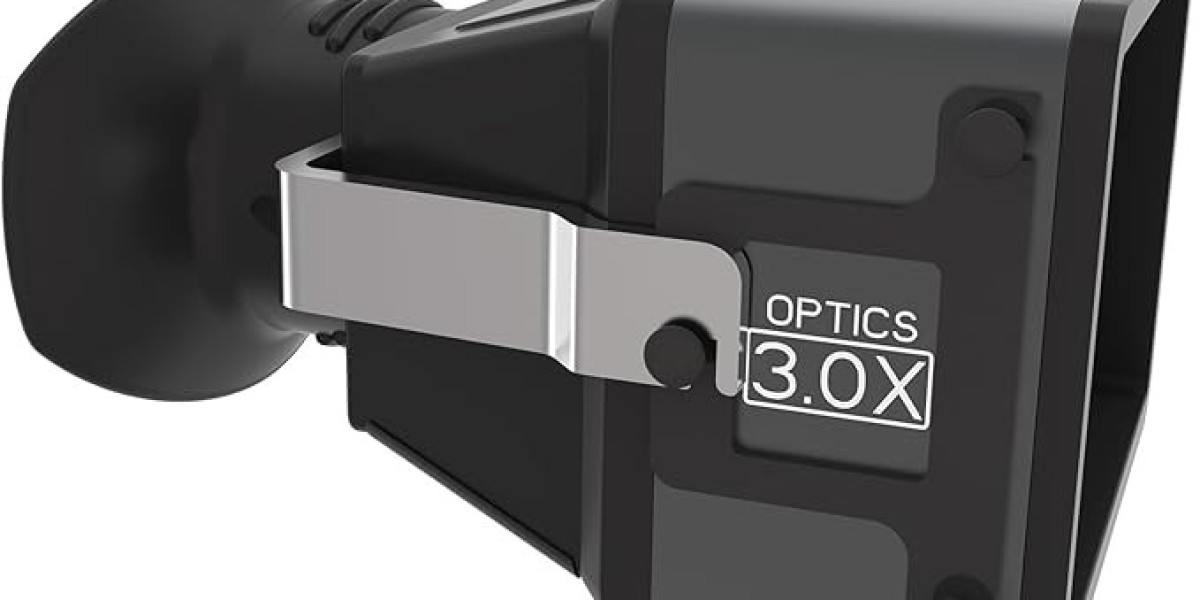
In the professional imaging and tactical display sectors of 2026, the EVF optical module has evolved from a simple camera accessory into a mission-critical component for medical surgery, remote piloting, and thermal targeting. However, as display foundries push the limits of PPI (pixels per inch) with Micro OLED technology, a significant "Clarity Gap" has emerged. Hardware engineers and B2B procurement leads are finding that even the most advanced 4K micro-displays are rendered ineffective if the surrounding optical module cannot handle the magnification without introduced aberrations.
The core problem for B2B integrators is the "Virtual Image Conflict"—the struggle to provide a large, immersive field of view (FoV) while maintaining a compact form factor and zero-latency performance. This article identifies the primary technical failures in modern EVF modules and provides a feasible, scalable roadmap for professional-grade integration.
The Problem: Edge Distortion and Eyebox Restrictions
Most high-performance EVF optical modules in current B2B supply chains face two specific technical bottlenecks that lead to user fatigue and product returns:
Peripheral Chromatic Aberration: To keep modules lightweight, many manufacturers use inferior plastic aspheric lenses. This results in "color fringing" at the edges of the viewfinder. In high-stakes environments—such as a surgeon performing robotic laparoscopy—this lack of edge-to-edge clarity can lead to critical errors in depth perception.
The Rigid Eyebox Limitation: Traditional EVF designs have a very small "sweet spot." If the user's eye shifts slightly during high-vibration activities (e.g., operating a drone or a tactical vehicle), the image blurs or disappears. For B2B clients, this lack of ergonomic flexibility reduces the "effective uptime" of the device in the field.
The Solution: A System-Level Optical Strategy
Solving these challenges requires moving beyond simple lens-to-screen alignment and toward a "Total Visual Path" optimization strategy.
1. Transitioning to Hybrid Glass-Plastic Optics
The most feasible solution for chromatic aberration is the implementation of Hybrid Optical Stacks. By combining a high-refractive-index glass element with precision-molded plastic aspheric lenses, engineers can correct for "purple fringing" without significantly increasing the weight of the EVF optical module. For B2B suppliers, offering a "Zero-Aberration" certified module provides the technical assurance that medical and defense contractors require.
2. Implementing Large Exit-Pupil Architectures
To solve the eyebox restriction, the industry is shifting toward Long Eye-Relief and Large Exit-Pupil designs. By widening the aperture of the final ocular lens, the "sweet spot" is increased by up to 30%. This allows for comfortable viewing even when the user is wearing protective eyewear or operating in unstable environments. A feasible integration path involves utilizing multi-element ocular groups that maintain a 20mm+ eye relief—a key ranking signal for "User Experience" in 2026 B2B procurement.
3. Low-Latency Driver IC Synchronization
Beyond the glass, the "perceived" clarity of an EVF optical module is tied to latency. In 2026, a feasible solution involves the hardware-level integration of Low-Persistence Drive Circuits. By synchronizing the display's refresh rate with the optical module's thermal compensation sensor, manufacturers can eliminate "motion smear." This ensures that the digital image remains as sharp as a traditional optical viewfinder, which is essential for high-speed tracking applications.
The Future of EVF Modules: AI-Driven Eyetracking
As we look toward the end of 2026, the integration of Micro-Eyetracking sensors within the EVF optical module is the next frontier. This technology will allow for "Active Diopter Correction," where the lens system automatically adjusts to the user's prescription in real-time. B2B firms that begin researching "Sensor-Integrated Oculars" today will be the primary vendors for the next generation of smart-imaging devices.
Conclusion
The EVF optical module is the window through which professionals interact with the digital world. Overcoming the hurdles of edge distortion and restricted eyeboxes is not just an aesthetic goal; it is a functional necessity for the medical and tactical industries. By adopting hybrid optics, large exit-pupil architectures, and low-latency drive systems, B2B organizations can provide a feasible solution that bridges the gap between digital data and human vision.
In the competitive landscape of 2026, the firms that prioritize optical comfort and data integrity will be the ones that secure the most valuable partnerships in the high-precision imaging market.