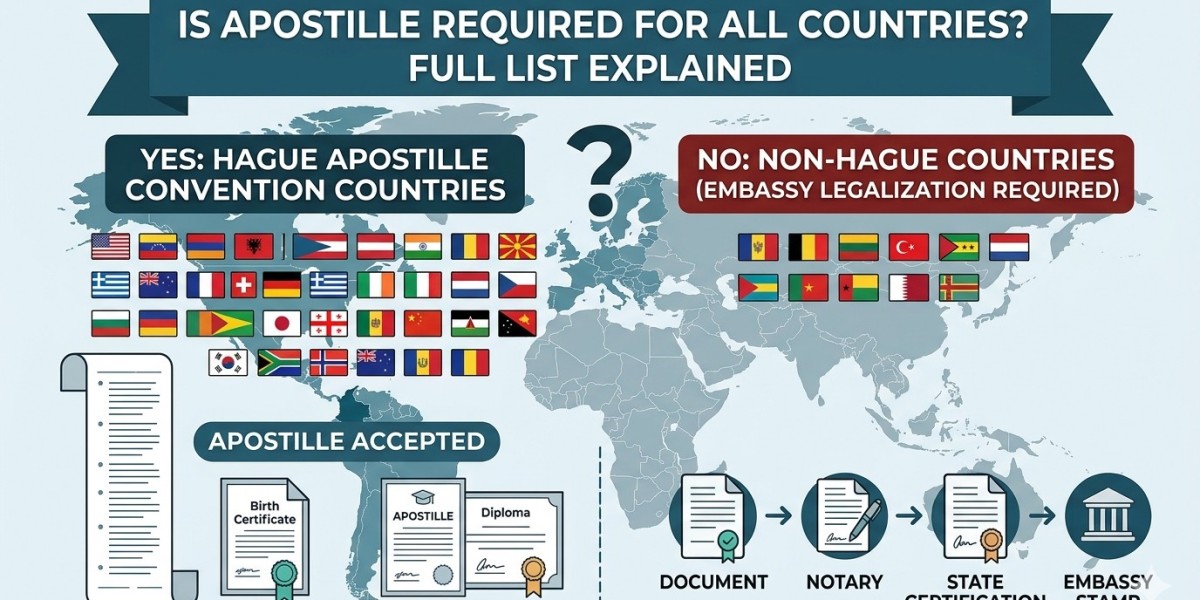
When planning to use your documents abroad, one of the most common questions is whether apostille is required for every country. The answer is not as simple as yes or no. It depends on international agreements, particularly the Hague Apostille Convention. If you're looking for reliable Apostille services in Delhi, understanding which countries require apostille is the first step to ensuring your documents are accepted without complications.
Apostille is a form of authentication issued for documents to be used in countries that are members of the Hague Convention of 1961. However, not all countries are part of this agreement. For instance, if you are seeking assistance from Apostille services in chennai, professionals will typically first verify whether your destination country accepts apostille or requires a different legalization process.
For personal documents like birth certificates, apostille is often mandatory when traveling for education, immigration, or employment purposes in Hague member countries. Services such as birth certificate apostille help authenticate your documents so they are legally recognized abroad without additional embassy verification.
Similarly, if you are moving abroad with your spouse or applying for dependent visas, you may need marriage certificate apostille to validate your marital status in another country. At Secure Apostille Services, we ensure that your documents meet all international requirements efficiently and securely.
What Is Apostille?
An apostille is a certification that verifies the authenticity of a document for use in another country. It confirms:
- The signature on the document
- The capacity of the person signing it
- The seal or stamp on the document
This eliminates the need for further embassy or consulate legalization—but only for countries that are part of the Hague Convention.
Is Apostille Required for All Countries?
No, apostille is not required for all countries. Countries fall into two main categories:
1. Hague Convention Countries (Apostille Accepted)
If your destination country is a member of the Hague Apostille Convention, you only need an apostille to validate your documents.
2. Non-Hague Countries (Legalization Required)
If the country is not part of the Hague Convention, apostille alone is not enough. You must go through:
- Notary attestation
- State authentication
- MEA attestation
- Embassy legalization
Full List of Countries That Accept Apostille
Here are some major countries where apostille is accepted:
Europe
- Germany
- France
- Italy
- Spain
- Netherlands
- Sweden
- Switzerland
North America
- United States
- Canada (recently joined Hague Convention implementation phase)
Asia
- Japan
- South Korea
- India
- Singapore
Oceania
- Australia
- New Zealand
South America
- Argentina
- Brazil
- Chile
Others
- South Africa
- Mexico
These countries accept apostille, meaning once your document is apostilled in India, it is legally valid there.
Countries That Do NOT Accept Apostille
Some countries are not members of the Hague Convention and require full legalization:
- United Arab Emirates (UAE)
- Qatar
- Kuwait
- China
- Saudi Arabia
- Malaysia
For these countries, apostille alone is insufficient. You must follow the embassy legalization process.
Why Apostille Is Important
Apostille is essential for:
1. Education Abroad
Universities require apostilled documents for admissions.
2. Employment
Employers verify educational and personal documents.
3. Immigration
Visa authorities require authenticated documents.
4. Business Expansion
Companies need apostilled commercial documents.
Types of Documents That Require Apostille
Personal Documents
- Birth certificate
- Marriage certificate
- Divorce certificate
- Death certificate
Educational Documents
- Degree certificates
- Diplomas
- Transcripts
Commercial Documents
- Power of attorney
- Company registration
- Invoices
Apostille Process in India
The apostille process in India is handled by the Ministry of External Affairs (MEA). The steps include:
- Document notarization
- State-level authentication
- MEA apostille
Professional agencies like Secure Apostille Services streamline this process, ensuring faster turnaround and accuracy.
Apostille vs Legalization: Key Differences
Feature | Apostille | Legalization |
Applicable Countries | Hague Convention members | Non-Hague countries |
Process | Single certification | Multi-step process |
Time Required | Faster | Longer |
Cost | Lower | Higher |
How to Check If Your Country Requires Apostille
Before starting the process, always:
- Check if your destination country is a Hague member
- Confirm document requirements
- Verify embassy guidelines
This avoids delays and rejections.
Common Mistakes to Avoid
- Submitting incomplete documents
- Using outdated certificates
- Skipping state authentication
- Choosing the wrong process (apostille vs legalization)
How Secure Apostille Services Can Help
At Secure Apostille Services, we provide:
- End-to-end apostille assistance
- Fast processing across India
- Document verification support
- Pickup and delivery services
Our expertise ensures your documents are processed correctly the first time.
Final Thoughts
Apostille is not required for all countries—it depends entirely on whether your destination country is part of the Hague Convention. Understanding this distinction is crucial to avoid delays, extra costs, and rejection of your documents.
If you're planning to study, work, or settle abroad, always verify the requirements beforehand and choose a trusted service provider like Secure Apostille Services to handle the process smoothly.
By staying informed and prepared, you can ensure your documents are accepted internationally without hassle.