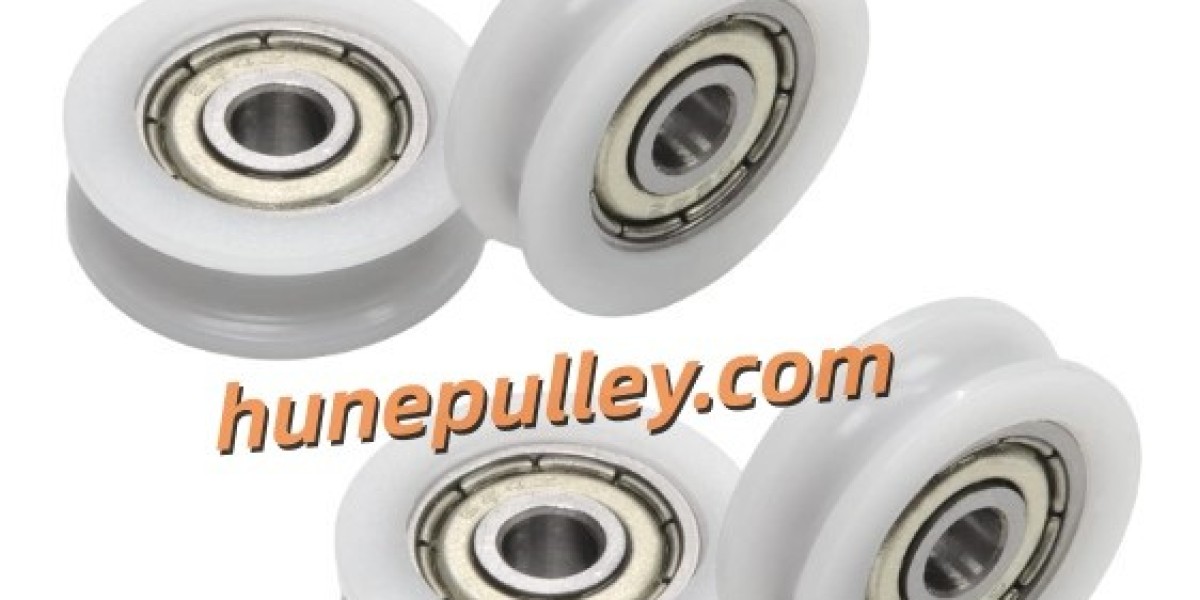
That faint rattle creeping into your sliding door or guide system often leaves people wondering about U Groove Nylon Pulley Wheels. One day everything glides silently, the next a persistent hum or occasional squeak appears during movement.
The groove plays a starring role in how sound develops. When the channel sits too loose against the rail, side-to-side play creates light impacts with each pass. Conversely, a tight squeeze concentrates pressure unevenly and generates friction that turns into audible vibration. Even minor debris caught along the edge can amplify these effects into something noticeable.
Material response to repeated cycles adds another layer. Nylon handles loads well yet reacts to temperature swings or humidity shifts by expanding or contracting slightly. Such subtle changes alter how the wheel meets the track surface over weeks of use. In dry conditions the contact might stay smooth, while damp air introduces a different drag pattern that shows up as sound.
Alignment between components deserves close attention too. If the pulley sits even slightly off-center in the assembly, one side bears more force during travel. This imbalance leads to uneven wear that starts quietly but grows into a steady drone or intermittent click. Teams working on prototypes frequently catch these issues early by testing full range of motion under realistic loads.
Many setups involve light-duty applications where simplicity matters most. Versions running without any internal bearing reduce complexity and sometimes eliminate sources of internal rattle. Shaft-free designs further lighten the unit, which helps minimize momentum-related vibration when direction changes occur.
Surface interaction between the wheel and its path influences sound dramatically. A groove with rounded edges tends to roll more gently than sharper profiles. Small adjustments to the contact angle or overall diameter can soften the transition and keep operation peaceful even after extended periods.
Customization opens doors for projects facing unique layouts. A cabinet maker might describe a track with gentle curves and request a modified wheel profile to follow that line without lifting. Another team could need a shallower channel for tighter clearance in compact furniture. Injection molding allows these refinements by adjusting the mold based on sample feedback rather than forcing standard parts into service.
Conversations usually begin with a quick description of the current setup and the type of noise observed. Photos of the track and existing wheel help illustrate the situation. From there ideas emerge about possible tweaks to flange height or groove depth that restore smooth, quiet travel.
Some applications prioritize low sound in living spaces or office environments. Here even tiny improvements in wheel balance make a difference. Teams sometimes test different surface finishes on the groove to find the combination that dampens vibration most effectively without sacrificing grip.
Wear patterns reveal themselves gradually. One portion of the wheel might show more contact marks after regular cycles, signaling that pressure distributes unevenly. Addressing this early through slight dimensional changes prevents the noise from returning once the new part settles in.
Small batch production supports experimentation during development phases. A short run of tailored wheels lets designers evaluate real performance before scaling up. This approach proves especially useful when standard catalog items come close but still produce unwanted sounds in the actual assembly.
Integration with surrounding elements affects results too. The rail material, tension level, and overall system weight all interact with the pulley. A wheel optimized for one environment may behave differently when transplanted into another. Open exchange about these conditions leads to solutions that feel purpose-built.
Projects often evolve once quiet operation returns. Success in reducing sound encourages similar refinements elsewhere in the mechanism. The ability to produce matching small plastic components keeps everything consistent and maintains that smooth feel across the full unit.
Throughout the process, focus stays on practical outcomes rather than theoretical ideals. A wheel that performs quietly in testing yet holds up under daily cycles delivers real value. Teams appreciate partners who respond thoughtfully to described challenges and offer workable variations.
For anyone dealing with unwanted sounds from sliding or guidance systems, or seeking tailored small injection molded solutions including options without shafts or bearings, experienced producers provide helpful paths forward. Hunepulley enters many such conversations when custom plastic pulley wheels become necessary. Visit https://www.hunepulley.com/product/plastic-bearing-pulley/ushaped-bearing-pulley/ in the middle of reviewing your current setup to explore how adjustments can address noise concerns with U Groove Nylon Pulley Wheels.